BevNET's New Beverage Showdown returns to BevNET Live taking place December 8th through 10th in Marina Del Rey, California.
Apply to pitch your beverage startup to a panel of expert judges, our live audience, and those tuning into the free live stream.
Gain industry recognition, take away important expert feedback, and compete for the grand prize.
Head to bevnetlive.com to learn more.
Welcome to the Community Call Podcast.
I am Melissa Travers, Director of Community here at BevNET & NOSH, here with my co-host, Lucas Southerd.
If you're enjoying the show, please follow and review us on Apple Podcasts or your listening platform of choice.
Lucas, great to have you here in the spirit of mixing things up.
I wanted to have you on your senior reporter at BevNET & NOSH, and it's just such a pleasure to have you here.
Thanks for hopping on.
Yeah, I'm happy to be here.
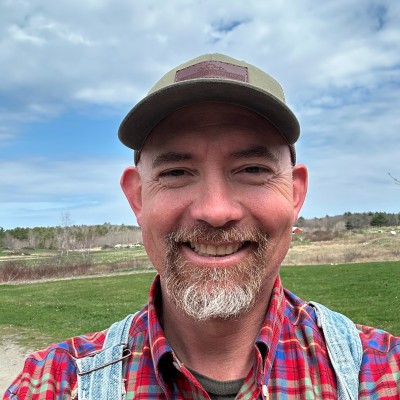
Likewise, before we get into the hard news, I do have to tell you that your mustache is looking especially lush today.
Well, I appreciate that.
I just shaved the like, scruff off, so it makes the mustache pop a little bit more.
And I did it yesterday during the day, and when my kids got home, my oldest Oscar was a little thrown off.
And I was like, wow, imagine if I actually shaved the actual mustache off, he'd be really thrown off.
He was like, I don't know if I like it, I don't know if I like it.
I'm like, well, it will grow back in like three days, so don't worry about it.
Do you have like a regimen of, you know, like beard oils and waxes and, cause really, I mean, we were talking about this, like not everyone can pull off a mustache, and it just looks very well done.
I mean, you know, there is some upkeep that you need to do.
It's a lot of trimming.
I mean, I've had a mustache for, I don't know, like 10 years now.
So it's kind of second nature, but I put a little oil in at night before bed.
Sometimes I put in some like beard conditioner, but I don't use wax.
I've never been a waxed mustache guy, although I did threaten to wax my mustache for the upcoming live events for my onstage appearances, just to really, you know, add some spice to the onstage content.
I think if you did that, you'd have to make your way onstage on one of those like huge one-wheeled bicycles.
Like a segway my way up onstage or something?
Yeah, yeah, yeah, yeah, yeah, yeah.
Maybe I'll wear like a three-piece suit or something.
Like really just go for like, you know, bespoke like craft bartender or something.
Look, bespoke bartender is perfect.
Yeah, the events are coming right up.
Are you, what are you working on for the events?
So I'm working on a couple of panels both for NOSH Live and BevNET Live.
I've got one for NOSH Live that's going to focus around manufacturing, kind of wading into some waters that I've been reporting on through earlier this year, the Trendlines series we did.
I talked about the decision for brands to do self-manufacturing.
So this is kind of playing a little bit in that.
And then we're still finalizing what's going to happen for BevNET Live, but I think I'll do at least one or two of the sessions on stage.
So they'll be excited.
Well, I'll look forward to that.
And for everybody out there, of course, you can go to noshlive.com, bevnetlive.com to register for our shows, see exactly when and where and how they're happening.
So everyone should check those out there in December in Marina Del Rey.
So hope to see everybody there.
All right, I think now is the time we dive into the hard-hitting news, do you think?
Let's do it.
I saw this article that you wrote.
It came out, I think, last week.
And I thought it was so interesting, and I wanted to have you on to talk about it a little bit.
The title of the article was Betting on Breast Milk is Lactoferrin, CPG's Newest Functional Ingredient Obsession.
I just like, I saw that and I was like, what?
I mean, we're milking flax seeds, we're milking sunflower seeds.
I mean, it just makes sense that we're just making sure that we're getting all the milk out of everything the weekend.
Yeah.
Could you please explain to us human equivalent bioactive protein, which is lactoferrin, as I understand it.
I have been kind of following this category a little bit.
Over the years, I'm very interested in alternative proteins and cell-cultured meats and seafoods and in this case, breast milk basically.
Lactoferrin is a bioactive protein that is kind of the most nutritional part of both human and bovine milk or pretty much any mammalian milk.
There are a couple of companies out there using precision fermentation to basically make lactoferrin without the use of humans or as we usually get it from dairy cows.
And it could be really useful in terms of this being used as an ingredient that can be added to not just infant formula or children's nutrition, which would be kind of the obvious choice, but there's also companies that are putting it into kind of more broad adult CPG products in food and beverage like functional RTD coffees and nutritional supplements that really will add a lot of health benefits that the lactoferrin brings.
So is the lactoferrin that we're talking about now that's derived from human breast milk, is it very different than the lactoferrin that we've been deriving from cows?
Is it significantly different, Dino?
I don't know how much different.
Most of the lactoferrin that ends up in infant formula is, or all of it actually, that is commercially available now comes from dairy cows.
It's purified from dairy milk.
And so there's one company that's making precision fermented dairy lactoferrin.
And that company is called Turtle Tree.
And Turtle Tree is the company that is partnering with Cadence Cold Brew to release a espresso shot with lactoferrin in it.
Now, there's another company that just raised $45 million in a Series B round, and they're called Helena, and they're based out of New York.
And they are making the human equivalent lactoferrin using precision fermentation.
Now, there's a little bit of marketing going around with what is better or worse, or better for you, whether the bovine derived or the human derived lactoferrin.
Helena insists, and they have some studies that are about to come out, saying that the lactoferrin they're creating, the human lactoferrin equivalent, is actually a little easier on your gut.
So it helps with, it's not as hard on your digestive system.
And because it's what humans are naturally used to consuming as infants and children, through breast milk, it's more attuned to the human biome than the bovine equivalent that we tend to consume through infant nutrition and stuff like that.
Wow.
So you mentioned Turtle Tree.
They are coming out with an espresso shot that has bovine lactoferrin added to it, is that right?
Yeah.
So they are coming out with that, I think, before the end of the year.
They have been working on this for years.
The brand, or the company, I should say, was founded in 2019 in Singapore, but they have Singapore headquarters as well as a production site here in the US.
And so they are bringing this lactoferrin to a cold brew espresso shot with Cadence.
They are also partnering with Strive, who makes free milk, an alternative dairy milk, and they are going to be putting the lactoferrin in Strive products.
I think there is going to be two different products.
One is more adult nutrition, so for elderly people who need supplements, as well as fortifying some of Strive's alt milks with lactoferrin as well.
So Turtle Tree is already kind of well on its way to becoming an ingredient provider of lactoferrin to CPG brands that we're pretty familiar with.
So if they're adding lactoferrin to an espresso shot, for example, is it almost like they're adding milk, but it's a little bit better for you?
Or is it not a milky substance?
Do you know what I mean?
Is it like an espresso shot with milk or is it a supplement added?
That's actually a great question.
I'm not actually positive.
I know that the form that it comes in, that both these food tech companies are making is a powdered format.
So I imagine it does give a little bit of creaminess to it, but I don't know if it's necessarily actually like a milk alternative.
I think for the Cadence, for the espresso shots, the Cadence Cold Brew Partnership, I know that they are positioning that as for high performance athletes.
So for both of these companies, Turtle Tree and Helena, the Lactoferrin is really important for women's health.
And they're focusing on women, not exclusively, but that is definitely a big kind of focus of what they're doing because Lactoferrin helps regulate iron in the digestive track and it supports bone health.
We hear so much more about women's health now than we ever did before, which is a really nice thing that like suddenly it's something that people are talking about and caring about.
So I can certainly see how this will be something we hear more and more about.
Do you think there's a possibility that using precision fermentation to make products like this will make, for example, infant formula cheaper and more readily available, especially after the shortages that we just recently saw?
Yeah.
Well, that is definitely a big part of this.
Both laura Katz, who's the CEO of Helena, as well as the Chief Product Officer, Chief Scientific Officer at TurtleTree, Dr.
Aletta Schneitzler, both said that what they're doing and the scaling that they've been doing over the last couple of years has really brought down the price of lactoferrin.
And that's a big part of it, is providing this functional ingredient in a less expensive way, because how it is purified out of dairy milk right now is incredibly expensive and I think it's fairly wasteful in terms of like what is what is removed compared to what is then not able to be used.
So using precision fermentation is more efficient and as it scales up into bigger and bigger formats will be a less expensive way to get lactoferrin.
Both these companies said that they have food products in mind and they have partnerships already in the works for CPG food, as well as the beverages that we've talked about.
Fascinating stuff.
You know, I immediately thought of that Meet the Fockers movie where Robert De Niro, yeah, anyways, I think anyone who's seen it knows.
You can milk anything?
Yeah, yeah, can you milk me?
I've got nipples.
Yeah, right, exactly.
I actually did think of that and I was like wondering, can I somehow put that in the story?
But it felt like a little off the cuff.
It might be able to date it now, you know?
Yeah, it probably is.
Well, I'm glad we got to exercise that here.
Really interesting story.
Everybody can go over to nosh.com and bevnet.com to read all about that.
Thanks for going over that.
I thought it was so fascinating and so happy to hear more about it.
Well, I happen to have here a Singing Pastures Farm pork stick.
Singing Pastures Farm also uses fermentation and a smoking process to make their meat, snacking sticks and their salamis, which gives it a tang, a flavor and more stability.
A more common way to make products like this is to use liquid smoke and encapsulated acids, which are acids that have been coated with hydrogenated oil.
So a product like this has really amazing differentiators, but you can have all the differentiators in the world.
If your consumers and the public don't know about them, it's going to be really hard to drive a trial and purchase of course.
In this Community Call, Holly and John Arbuckle, founders of Singing Pastures Farms, learn valuable tips and tricks for navigating a changed PR landscape.
One filled with influencers, affiliate partners, and social media from Sara Brooks of Goldilocks, and Kelsey Heiberg, and Jamie Rosenzweig of Friday's digital marketing firm.
Please enjoy.
Today's Community Call is about how to generate PR is a bootstrap brand.
So I met John Arbuckle a little while ago.
He is the owner and founder of Singing Pastures Farm.
And we got to talking about he and his wife Holly were trying to earn PR to drive web sales after they saw similar success with another brand that they're friends with.
We talked about that a little bit and decided that we should do a community call about it.
Then I looped in the best of the best, Sara Brooks, co-founder of Goldilocks, and Jamie Rosenweig and Kelsey Heiberg, founders of the digital marketing firm Fridays, to not only figure out how to get exposure, but how to transform that exposure into actual sales.
Thank you all so much for joining today.
Not just for today, but for all of the work that went into this leading up and thinking and strategizing about the best way to approach this topic.
I'd like to start off with an introduction from Singing Pastures Farms, so we can all get to know you a little bit better.
Holly and John, farming is really difficult.
It's oftentimes a labor of love.
Can you tell us a little bit about Singing Pastures Farm and the unique proposition that you all are able to offer with your meat snacks because of the way that you're farming and producing the product?
Absolutely.
We're a husband-wife team.
We're both founders.
And I'll just give my two cents worth, and then I'll make sure Holly has a chance to talk more about that too.
But my name is John Arbuckle.
Our family, including our children, is a 10th generation farm family.
We are close to celebrating our 300th consecutive year of farming in America.
And truly, our story is a story of transformation.
When I started out farming as a kid, we were a totally conventional farm.
We raised pigs in indoor settings.
I hate to say we sprayed a lot of chemicals, we raised a lot of monocrops, burned a lot of petroleum.
And at some point, I'll tell you the whole story.
At some point, my father was actually diagnosed with Parkinson's at the age of 47.
And that had a big light bulb moment for me of there's got to be another way to do this.
There's got to be a life-giving way to farm.
And there is people, lots of people have done it.
Hundreds of years, people have done it.
And so we began our process of transformation.
And sometimes it takes something like that to create true, meaningful, long-term, profound transformation.
So we removed the pigs from the indoor settings, we put the pigs in the woods, we rotationally grazed them over grasslands and fields of wildflowers through forest of acorn producing oaks for the acorn drop in the fall.
We changed our genetics, we transformed it from like the white kind of pink factory farm pigs to now, our pigs are every color of the rainbow, they're the old-fashioned kinds.
We removed all of the genetically modified feed ingredients, we removed the antibiotics.
And now, essentially what we have is we have the same kind of operation that my grandfather and grandmother would have recognized back in the 30s and 40s.
We have colorful, diverse pigs out on pasture, outdoors, going on this spa-like summer camp experience, and when we get to the high-tech end of things, that's where my brilliant wife steps in.
Her name is Holly.
And I'll let Holly go past the farming part.
I'm mostly in charge of the farming and the operations, and then Holly is in charge of a lot of everything else.
I think that John really embodies all of that farm enthusiasm and energy.
And then we are also this other thing, which is a brand, which is why a lot of your people are tuning in today.
So I'm the CEO, I'm the 51% owner, so we're woman owned.
And so John and I have different lanes.
And so what I look at is how do we grow the brand?
And our primary product line is Rome Sticks.
It's a Pasturez Pork Snack Stick.
And we also sell salami.
We have two varieties of Pasturez salami.
And so one of the things that I'm really interested in learning from you all today, is that because culturally and our identity and our life is so wrapped up in the farm, we have talked about that a lot in our packaging.
Our PR has been around the farm.
But it's not just our farm.
We source at this point, we're at, we're on thrive, misfits and perfect foods.
We launched at Sprouts.
We are not magically growing all those pigs.
We work with other partner Pasturez Pork Networks.
And what is I slowly come to is that what's really important to our consumers is the taste and the health.
And so that's what I want to really talk to you about, how to get those messages out.
because I love it that we farm, but we really want to hit the quality of our ingredients.
We're the only Pasturez Pork snack stick.
There's lots of grass fed beef.
And the other thing is that we use the old fashioned processes of fermentation and slow smoking, which is really unique because most of the brands are using a more synthetic process of something called encapsulated citric acid or lactic acid and liquid smoke, which is something you pour into the snack stick with a mix with a five-gallon bucket, right?
So it's our crafting and the quality ingredients and trying to get people to talk about us in terms of food, because as soon as they hear that we're a farm, that's what we get our PR about, right?
They want to come and shake the hand of Farmer John.
So I would love to just be able to learn from you all today.
And Holly, could you tell us how are you going after press right now, if that's something that you've really gone after up until this point?
I would say that the press we have gotten mostly is around the farming.
So we've written several SARE grants, their agricultural grants, and then we've done nutrient density studies, and that gets released.
We're going to be doing a day, we have a grassland bird population monitoring program at the farm, just showing how better soil and better farming just explodes the wildlife on a farm.
Like we're going to have press around that.
I'm really stuck on trying to get, how do you reach out to food outlets?
because even when I specifically ask people that I know who are involved in the world about talking about food, they still redirect me to, oh, you should talk to No-Till Agriculture podcast.
I'm like, I love them, they're great.
We know a lot of the farmers that are really leading the movement in this country.
It's the food part where we really are, I feel like there's a vacuum.
Sara Brooks, you are one of the founders of Goldilocks.
You are the first person that I thought of when I was talking to the team at Singing Pastures Farms.
How long have you been in the industry now?
I've been in CPG brand building comms for over 20 years.
So my background is mostly PR, top of funnel marketing.
I had a firm called Covet, which I sold a few years ago, and now I'm doing a more broader marketing brand strategy, brand positioning, and it's so funny because I get hit up all the time, like I need PR help and I actually go back to the brand positioning and brand strategy.
Like what are we offering consumers that no other brand can offer in the way in which we're doing and how do we make that love to purchase process repeatable?
And it always starts with story.
And so when I hear I've got to try the products, which are incredible and learning about you guys, a 10th generation farming family and everything you're doing, it's incredible.
And your problem isn't unique, Holly.
I think a lot of people are trying to figure out, how do I break through the clutter?
Do I focus on story?
Do I focus on product?
Do I focus on taste?
Do I focus on sustainability?
You know, what I've learned and I think probably what you guys are learning is when you sell a food product, it has to taste good, right?
You can have an incredible sustainability mission.
And that oftentimes will get people to the brand, although it's a little more niche.
But to get people to come back, it really has to be about taste and kind of what the product experience is.
And so when you think about how to do PR in 2024, it can be extremely intimidating.
I think just to kind of give a quick summary, PR has changed a lot.
So back in the day, you had an amazing product, you could get a great press list, you could have a really good pitch, you could send editor samples.
And, you know, if you had the right person and you were targeting the right outlet, product coverage would come.
It's really shifted these days.
It's become a little bit more of this kind of hybrid pay to play model, which is why I was excited to bring on my friends from Fridays to kind of talk about the intersection of PR, performance marketing, because it's all very intertwined now.
And so I think anyone who's doing PR now has to have a much more holistic point of view because it's this kind of flywheel and it's all cyclical.
If you're doing it in a silo, you referenced these great reports earlier, you may put a press release out, but it's probably going to die in a silo.
It's like, well, who needs to know about this?
And then how do I convert those people to site?
How do I get them to purchase?
I'll speak briefly just about what performance PR is for people that don't know.
And that is really, I think, if people have heard of the term affiliate.
Affiliates are used in lots of different ways.
A lot of people think affiliate marketing may be influencer marketing, but now PR is actually really driven by affiliate.
And what I mean by that is, if you are up on a Shopify site and you have an e-com model or a D2C model, even if it's on Amazon or Thrive or Instacart, you can participate this way.
And basically what that means is if you're going to pitch an editor a story about your product, you want to also be set up on a platform like a share sale, which is a top tier affiliate platform, which basically means if food and wine writes about you, they will likely have something at the bottom of the story which says, our publication may earn commission from this story.
And what that means is when a publicist pitches a brand, they may say in their pitch, we're set up on share sale, our commission is 20 percent.
And what that ultimately means is if food and wine does a story about you, an affiliate link is included in that.
Food and wine will get a cut of the purchase of any time someone reads the story, is directed to your site and then purchases.
And that's kind of like the proof is there's this blending now of church and state of pure editorial and pure sales.
And so for anyone investing in PR now, I 100 percent recommend being part of something like a share sale, because that is kind of a necessary evil these days to get, to kind of earn top tier coverage.
All these publishers are doing it.
And so understanding kind of that ecosystem is really, really important to secure top tier coverage.
And I'll pause because there's so much more to say about this, but that is definitely something that I would, would encourage anyone to be looking into.
Sara, that was a great setup.
Thank you for that.
Yeah.
And actually that's a great segue into introducing the team over here at Fridays, Jamie Rosenweig and Kelsey Heiberg.
This was the first firm that you mentioned when we started talking about doing this show.
So Jamie and Kelsey, can you tell us a little bit about what you do over there at Fridays?
Yeah, sure.
I'll go ahead and intro and then, Jamie, feel free to jump in if you want to add anything.
But to simply put, Jamie and I were a marketing strategy consultancy.
We provide fractional support to help bold CPG brands level up their marketing strategy and teams.
We're holistic marketers by trade with a strong background in digital, so that's why we work with Sara a lot.
We focus more heavily on the digital side of performance marketing.
Just by way of background, we spent the last five years before starting Fridays.
As co-VPs actually of marketing at a disruptive toy and game company called, it's now relatable, but it used to be called What Do You Meme?
Where we built and scaled the marketing team and program from the ground up.
We were everything in the very beginning.
We were doing everything with our, I guess, 10 or two hands.
And so during our time there, we got to play a really exciting part in building the brand from kind of a D to C category entrant to a highly distributed and leading manufacturer in the adult party game space, which was so exciting and something that we're really proud of.
And it was an amazing journey from start to finish.
I guess now we've launched our consultancy Fridays and we've actually been professionally partnered for 13 years.
We created Fridays kind of out of a passion for wanting to help other brands scale and drive growth through marketing and then kind of focus on the intersection of the better for you food and health and wellness spaces, which is admittedly where the two of us spend most of our personal dollars.
And I'll let Jamie chime in if she has anything to add.
Yeah, I know.
I think that was a great summary.
I would just maybe add that before we did our stint at Relatable, we were running our own consultancy before that as well.
So Fridays is kind of the 2.0 iteration of that, that we came back to after a stint in-house at a brand.
And that, you know, we've worked with several brands in the kind of general health and wellness space.
I mean, that's pretty broad, but we have a focus on CPG specifically.
And it's been really exciting to dive back into those spaces this year.
And we love working with Goldilocks.
It's, you know, they're kind of the yin to our yang.
It does seem like a match made in heaven.
And just to add to kind of, you know, what Sara was saying before, I think we get a lot of perspective clients kind of hitting us up asking for like tactical support, but like it really does come back to the storytelling and the brand messaging and the differentiators and USPs to really be able to do well on those tactical channels and tactical approaches.
So I just wanted to kind of add that.
Excellent.
Before I hand the baton back over to you, Holly, to start digging into some of this, I do want to ask a quick question that we have from our audience.
This is from Sahithya Winrich from Chutney Punch, Hi Sahithya.
Sahithya wants to know, what's a commission rate that is worthwhile for publications that brands can offer and can brands set up a sale themselves?
Twenty percent tends to kind of be the most, I think, kind of like where a lot of brands kind of end up on.
You can start at 15 percent.
The more aggressive your commission rate is, honestly, the more likely you'll get coverage.
You obviously have to balance out with your own product margins and making sure that it makes sense for the business.
You only pay if someone actually purchases, and so that sometimes is an easier thing for people to swallow.
Oftentimes, if you're pitching an editor, they may come back and they may just very bluntly say, we need a more aggressive commission rate.
At that point, you can decide and you can change that on the backend.
The second part of your question is yes, you can absolutely set it up.
It is super intuitive.
I think it's like a flat fee of $650 or $700 to just get on the platform.
They encourage you to create a small escrow account where you put like $150 or $200 in, just so there's something there.
So when the engine starts to go, there's cash to pull from.
But it's super easy to manage on the backend.
And I have no affiliation with ShareSale.
It just is truly the one that publishers prefer.
There's lots of versions of this.
But one of the reasons that I like it is, a question I get a lot is like, do I need a PR agency?
Like, can I do this on my own?
And you can do ShareSale on your own.
You can also do PR on your own.
And there's a lot of ways that you can kind of hack the system.
Whether it's going and just reading the bylines, which is who wrote this story, going to see where that editor is on Twitter or X or on LinkedIn.
I think it goes a long way when a founder reaches out personally and says, I'm a big fan of your stories.
I'd love to introduce a product and I send you samples.
Here's a little bit about us.
It does not have to be this perfectly oiled pitch.
And there's lots of ways you can go back end and try to get press on your own.
There's things you can subscribe to like Press Hook.
There's Scision, which was recently bought by PR Newswire.
That is a database of every editor and their emails and what they focus on.
That's a little more costly.
But if you really want to do PR by yourself, you could get access to that and you could literally start to make a target list.
These are the 40 publications I want to see my brand in.
You search by outlet name.
It will give you all the editors that work there along with their beats, what they focus on and their emails.
The benefit of having a publicist on the flip side is more that kind of strategic guidance.
How to pitch, when to follow up, what to include.
But you can absolutely hack the system and that includes being able to do share or sell.
I knew this show was going to be full of helpful information.
That certainly is such a great example.
Thank you for that and thanks for the question, Sahithya.
Holly, I would like to turn the conversation back to you.
One of the things that I think stood out to all of us about Singing Pastures Farm were the core differentiators that you have and how meaningful those are, not just in the quality of the product, but the sustainability as well.
What are some of your questions around how to best communicate your value proposition?
I think that we're in the same boat as a lot of people, that we are 100 percent bootstrap to date.
I think that we've had a little bit of a conversation before, like the dynamic between we can go right into talking about the farming, and I really want to talk about the product.
I want to talk about how it's different because of, especially how it's crafted because people don't know that.
That's new information, but the slow smoking, I think we smoke our sticks for four times as long as some of the leading brands, and the fermentation which adds a depth of flavor to it, that's really different than the faster, more cheap and synthetic process of using an encapsulated lactic acid.
I want to be able to highlight those things.
I have share a sale.
If you were me, where would you start?
because as a bootstrap brand, there's so many things that you could do.
What would be like, just like as if I were in first grade, just what would you tell me to do?
Great question.
It can be a really hard question that founders are trying to answer.
I think that when I learned about your brand, I kept thinking like every brand now needs to have content, because content is what fuels consumers.
It's what engages consumers.
PR is no longer in a silo.
How does PR work with social?
How does that work with content?
I think that having a content engine for a brand like yours, it would be probably where I would start.
When I was reading on your site that you move the animals every few days, I was like, this should be captured on content.
Farmer John out there moving the animals, humor, showing the beauty of the farm.
And that is the storytelling piece.
And the more that you hit consumers over the head with like, look at our beautiful land, look at how we take care of our animals, that starts to give that credibility and the validation.
We're doing something different and everything and what we do is based on quality.
And so that is a tenet of storytelling, although it's not your like direct one-to-one PR.
But then what that starts to do is it starts to just kind of help consumers understand, why is this different from a slim jam, right?
Like why come here and not there?
And so having a content strategy has to be thought of in tandem with PR.
And there's lots of ways to do that.
You could, you know, go on Instagram yourself and find influencers that feel like they're in this realm and DM them and say, I'd love to send you product.
And that's where affiliate also comes into play.
They can do content and then they can have an affiliate link.
And Jamie and Kelsey can speak a lot more about that as well.
But I think the first way to start is when you think of PR, there's usually three buckets.
There's consumer media, which is like Bon App, Food and Wine, you know, Wall Street Journal, like where your consumer is reading.
There is trade media, which is like NOSH, so the leader in BevNET, the leader in food and beverage trades.
And then there's like the business media, like the Forbes and the Inks.
Right now, your focus should really be on consumer media because we're trying to get consumers to the brand.
So figuring out what outlets are your consumers reading and what outlets are you not even aware of that we should be, and I can help you with this offline.
I'd be happy to just give you a list.
And that's where you just start to go and you start to consume the coverage.
So if you're not hiring a publicist, understanding kind of what is this content that people are writing about, and then you find the editor who wrote it.
Like I said earlier, it's so easy to find people now and actually get in their inbox, be it LinkedIn, be a DM on social, or sometimes they even have their actual business email in their bio.
And you send them and you say, hey, I would love to introduce you to this brand.
You pull out the two or three most important things about the brand and you give them samples.
And that's always the first thing.
I think if your product can speak for itself, which I know it can because I tried it, you get people into the brand on taste and then you can start to tell a little bit more about the story.
Anything to add there, Jamie Kelsey?
Exactly what you said in terms of how affiliate works for both PR and marketing.
It's also a really great performance based way to dip your toe into the creator space or influencer light, I guess you could call it.
So if you're set up on share sale, you can also be reaching out to content creators.
There's different platforms that you can find content creators on and you can say, we offer X amount, X percentage commission and you can specify further, depending on where your customer is.
Say for example, you really want to reach Gen Z and Millennial Consumers.
Those folks are on TikTok a lot.
So you can specify on some of these UGC content creator platforms that you want TikTok content, you want TikTok style videos and that they can use that link in their bio or in their captions or with their followers.
And then any sales that they generate from that, they will get a commission on.
So it really is useful in a lot of different ways to be on share sale.
Yeah, I was also going to just add to that if like TikTok is, and we'll probably talk more channel strategy later on.
But if TikTok is part of your overall social media strategy, they now have a, it's called TikTok Shop, where it's essentially a platform based affiliate program.
And you can work with affiliates in the same way there that you can on share sale.
So they can get a percent commission of every sale that they drive.
And it's a great like channel if you're trying to maximize affiliate and creator content on that particular channel.
Yeah.
So we can start looking for people on TikTok that we'd say, okay, we'd like them to generate content.
I mean, but even for that, this is a really basic question, but hopefully I'm not the only one in the audience that has it.
Like what do I even look up?
Like, so let's start with just the snacksticks.
That's our hero product line.
And I also at some point, I would love to hear now that you all have tried the product and we've talked a little bit.
Like when you hear about us, you know what strikes you as our product differentiators?
because to me, the sexy part of our story is the fact that like we live on a farm in Maine.
Isn't that beautiful?
We have apple trees and peach trees.
And we do grassland bird populations.
So it appeals to that heart part of like, that's really cool.
And I am 100% sure that people in the grocery store, the key is to get them to try the product.
because if they taste it and the difference in taste and texture, that's what's going to have them want to buy again.
Do you see what I mean?
because we have so many stories in a way, I feel like it gets too broad.
So I would just like to hear some feedback about like what, as somebody who's just been introduced to the brand, what do you think is the most important?
Not me saying it, but you saying what you think is most important for us to put out there.
And also like, okay, I sell a meat stick.
Where do I find those TikTok influencers?
One of the most valuable things an early stage brand can do is talk directly to their consumers.
So find the people who are your brand evangelists and say, hey, can I send you a 20 question survey and just get feedback?
Why are you coming to the brand?
What brand did you change me in for?
What makes you repeat?
What is your favorite flavor?
Literally going to your community and asking is a low to no cost way.
because oftentimes your consumers can help point something out that maybe you're not aware of.
And you can coalesce around feedback for future innovation or limited time skew or things like that.
So I would say like, I tell all brands to do that, whether that's DMing people.
Obviously, if you have a Shopify site and you see who's ordering a lot, but go to your people.
They are like your best resource.
And if they're coming back for more, nine times out of 10, they're willing to help.
And you can say, I'll send you some free product as a thank you.
But for me, I'll just say it was taste.
It was by far taste.
And I tasted a lot of meat sticks.
I used to do FXPR and Strive PR.
So like I know this space and I would say taste, but you want to get a lot more nuance in that.
And that's where brand strategy really helps.
It really helps you find like, what can you build a moat around for your brand?
Like what are you offering consumers that no other brand can?
And then again, like I said, in the beginning of the call, you hit consumers over the head with that time and time again.
I kind of want to jump in too quickly.
To kind of add to that, I think, you know, I think you have to go back, you have to sort of start at the top and remember like what problem am I solving for my consumer and work that into your messaging.
And I think for me, I'm really health conscious.
So like it's the better for you aspect of your products that really resonate with me.
I've been trying to cut out, you know, like cow and like red meat a little bit more than other proteins.
So I think for me, like having it be like the only pork stick is a huge differentiator.
So I would lean into that.
And I think that there's like a whole movement around better for you products really happening right now.
And so that's a really relevant conversation to be in.
Yeah, I totally agree.
I agree with both of those things.
But I also think once you have, first of all, like don't guess on who your audience is, like use data to inform that.
So you can do surveying, you can sort of gather data and you can also use your current customer database to learn more about who is currently buying from you.
And then once you have that marriage of who is currently buying from you and who do you really want to target, then you can create a messaging strategy that ladders up to those kind of personas, those different buyer personas.
And then every piece of content that you make and every kind of piece of outreach you do, every creator that you reach out to, you got to ask yourself which one of these profiles does this match with?
And then your unique selling differentiators, your USPs are kind of going to ladder up to them as well.
So for instance, with TikTok specifically, a lot of people are using TikTok as a search engine now, which is kind of crazy, right?
So like, you know how you guys might have heard that a lot of folks, instead of starting their search on Google now, are starting on Amazon, the same thing is happening with TikTok, particularly with Millennials and Gen Z.
So I would play around with TikTok as a search engine and search terms that feel relevant for your brand.
So there's a lot happening around protein, like high protein snacks or grass-fed beef sticks.
And then look at the videos that come up and the creators that come up, click on them and see what hashtags they're using and what their content is about.
And then that can give you other ideas.
And you can start a Google Sheet of just phrases and keywords and search terms that you are finding that you think are relevant for your brand.
And you can have different lists.
You can have like the protein centric one.
You can have seed oil free centric kind of terms.
You can have just better for you snack terms like that.
I mean, there are so many different kind of categories that you can do and then build that list so that when you're on TikTok, you remember, okay, I'm going to go.
I'm going to look at those terms.
I'm going to see which creators are showing up and then make a list of the creators that you want to reach out to.
Send them a message and tell them how much you love their content.
Make sure that you're saying why.
So like if it's a creator that really posts a lot about like low tox living or things like that, you can say like, we love that you care so much about the choices that you're making for your family, etc.
And offer them some free product and ask if they will post.
And it can be helpful in those instances to say, we're set up on share sale, we're happy to provide you with a share sale link, we're offering 20 percent commission, whatever it is.
But yeah, really use it as a search engine and then like spend time looking at the videos that come up and see who feels like they would be a good fit.
And when it comes to your own content, whether on TikTok or whether you feel like maybe Instagram is the better platform to invest in, you kind of have to think about who your audience is.
You also want to be having a mix of content that speaks to those different personas and those differentiators.
So I love what Sara said about showing content from the actual farm.
And then as time goes on, if you do start working with some of those creators on an affiliate basis, you can also repost their content, which kind of gives the more brand centric side to it.
And it's pretty much table stakes at this stage that if someone posts a video about your brand and tags you, you can organically repost it with credit.
So you just want to make sure that you're putting their handle in the caption, so that you're acknowledging that the video was created by that person.
But that's pretty much table stakes for any video about your brand.
You can always reach out and say, hey, we love this, we'd love to repost it just to check.
But typically if you give credit, it's all good.
And that kind of builds your content mix, right?
Like on whatever social channel you feel is the most worth investing in.
I would again mirror that question back to you.
What social channel do you think is most worth investing in?
And so let me tell you just what I've heard.
I have talked to other brands that have said, five years ago, I would have said, put your money into TikTok, excuse me, to put your money into Instagram and Facebook, right?
because those ads were really converting.
Now I've had people say, you really should get started on TikTok.
So to our great credit, I'm setting up a TikTok store, right?
So I listen to smart people and I will listen to you, okay?
And we're right at that stage where I'm like, okay, now what do I do?
So to mirror back what I just heard, because I've just got the store set up, like I'm, you know, ground zero here.
I go ahead and I look for people that are posting about Snack Stix.
I reach out, I say, try ours.
I assume TikTok has its own affiliate program also.
They don't have to go through share of sale.
Is that true?
Yes, that's TikTok shop.
Okay, so I have TikTok shop being set up.
So I find those people, they do content, they get a commission, 20% would be a good commission for them, I would assume.
Is that still true?
Okay, and then I repost their material.
But what...
It works a little differently with TikTok shop.
Specifically, if you are set up on TikTok shop, there's a backend of it called the affiliate center.
And within the affiliate center, you can search for specific creators, and then you can also search within categories.
So if you're searching on the front end of TikTok and you find people you like, you can always see if they...
You can search in the affiliate center and see if they're already on TikTok shop, because the creators have to be set up on that part of TikTok in order to participate in the TikTok shop affiliate thing.
And if they're not, you can always still send them a message and say, hey, we love your content.
We just got on TikTok shop and we're offering 20 percent commission.
And we think that you would be a great fit to create content for us.
If you would like to get set up on TikTok shop, here's the link for how to do it.
And you can just Google that.
And I'll just add one more thing.
I was actually at TikTok headquarters a few weeks ago, meeting with their head of food and beverage for TikTok shop, just trying to understand some tricks.
A few things that he recommended is you should focus on one hero product for TikTok shop.
And typically, what they have found is that when you offer a flash sale, as you're getting started on the platform, like a big clearance, something like that, kind of starts the engine a little bit.
And so he was, I mean, in brands, he mentioned brands that were doing, you know, hundreds of thousands of dollars a month on TikTok shop, if you do it right.
And the thought with TikTok shop is that if you could give the product to a high schooler without any messaging and have them talk about it for 20 seconds, like, and they could talk about it well, like that's what performs well on TikTok shop, because unlike influencer partnerships where you give them a script, like there's none of that with TikTok shop.
You're kind of going rogue and letting people speak on behalf of the product.
So there are some kind of best practices as you're getting started on TikTok shop, just to keep in mind, which is focus on HeroSkue.
Give a really good discount.
And then obviously that decreases once you have momentum on shop.
But it's like any platform or the algorithm, the more you post, the more there's momentum, the more the algorithm prioritizes you, and then you can start to get back to some more tolerable numbers.
So you're talking about a HeroSkue, not just a Hero product line.
So the product line are the Rome Sticks, Pastries, Pork Snack Sticks with three flavors.
You would pick one flavor.
That's what he recommended to me.
And would you pick your best seller?
Yes.
That's really interesting because I was thinking about, we're always trying to say, oh, we have this and this and this.
But interestingly, the original, which is our bacon stick, usually is our best seller because it has the word bacon in it.
But it's a close tie with pineapple, which there are a lot of people that are like pineapple is weird.
And then I think most of us on the call that have tried it, it's my personal favorite.
It's just, I mean, they're good for different reasons.
It's just a tasty flavor.
So like maybe, so I guess we could go either way.
We could pick one or the other and just say this one, we're really going to, and then would you just put the discount on that flavor, on that skew?
Or is it a whole product line discounted?
I would suggest discounting the whole either brand line or everything in your catalog because the way that it works best is if you can kickstart TikTok shop to really begin working, then you build the momentum that will continue.
Getting started is the hardest part though, so that's why we recommend doing a discount across the board.
Yeah, and also you can focus on one hero product in your communication, like what you're pointing affiliates to.
Like there's different ways in the back end, there's like targeted plans that you can do where you basically invite people to participate in this kind of campaign.
And you can select certain products to be part of the campaign.
So you could start with that hero product that you decide on.
But then say, for example, you get some great affiliate videos and there's certain affiliates that you would like to work with again.
You could message them and say, hey, you did such a great video for our original flavor.
Would you like to participate and do videos for the other flavors we're offering the same commission?
So like, you know.
It sounds like a lot of, and because again, I meant just the beginning of TikTok, like we're approved, right?
So if I, we set up.
That's great.
Yeah.
And that took a few times.
We set up the shop.
We get it all out there.
We reach out to people and try and get them to, you know, to sample the product and then post about it.
So we're really talking about mostly putting my energy into finding user-generating content.
Is that correct?
That's what I'm hearing.
And then it's basically, and it's secondary to then have like farmer John and Holly, like walking around the farm saying, hey, we have a really beautiful farm in Maine.
And by the way, we have, we sell snack sticks, right?
because people want to be entertained also.
Yeah.
Yeah.
So I think it's both, right?
It's both and all.
There's kind of three main parts of a successful, really successful TikTok strategy.
There's your organic content, which is, you know, everything that you guys film.
I would include affiliate content that you repost, you know, within that.
So basically everything that's going live on your TikTok account that you're posting.
Then there's paid, which is advertising.
And the way we see that, you know, work really well on TikTok is you amplify your best performing content.
So like you see what does really well organically or with affiliate, and then you can support those pieces of content with ad dollars, but that's kind of a phase two.
And then the third pillar is affiliate.
And affiliate can be a great way to jumpstart your account because even if you're working on content, if it's new to you, it can take time to start gathering a real arsenal of organic content to be posting, but you can use affiliate content to bolster that.
And so spending your time on the affiliate side can be a good investment of energy, especially, you know, being that you were able to get set up on shop.
Okay.
And I just wanted to jump in to quickly answer Elijah's question.
So he asked, is TikTok shopped mostly for DTC or is it wholesale retail?
And the answer is they have two types of ways that you can actually do it.
So one is like the DTC or Shopify integration.
And then the other is called FBT, which stands for Fulfilled by TikTok.
It kind of operates similarly to like FBA on Amazon, but that's like their wholesale model.
So of the social media platforms, because as a bootstrap brand, there's only so much you can do, right?
You can see everything, but you can't do everything, because you'll do it all poorly.
So you got to put one or two things, would you say, to put our effort primarily into TikTok as a brand starting out?
I mean, and I realize that's an opinion question and it's different for different people, but just like that answer.
Yeah, I mean, like so I can jump in here.
I think that TikTok is an incredible platform because it's a really democratic platform, meaning that creators have more opportunity to sort of go viral and the more viral, more viral virality you can have around your brand, it's going to create this halo that gets you sales at all of your points of sale.
And so I think like, Jamie, correct me if I'm wrong, but I think the stat that TikTok shares is like for every sale that's made on TikTok shop, you see 16 units sold.
I think it was up to, up to.
I think they're saying that brands who are on investing in TikTok shop and TikTok, you know, centric approaches, see for every sale you see on TikTok shop, they're seeing between five and 15 or 16 sales at other endpoints.
So like that could be on your site, it could be, you know, other places at retail, you know, whatever.
Yeah, so there is that halo effect.
I mean, I do think audience plays into it.
Like if your audience tends to be more like GenX and older, I would say meta is probably where you want to be, meaning Facebook and Instagram.
And I will say, like across the board, we do still see Facebook ads really work and work with a variety of audiences.
But if you're really focusing on awareness, you want people to know who you are, you want people to try your product, you want to kind of put yourselves on the map as like, we're here and we have this great thing to offer.
I think TikTok is a good investment.
And what Kelsey means by that it's democratic, she means that you don't have to have a big account to have videos go viral.
So on a lot of other platforms, the size of your account kind of correlates with the reach of your content.
But on TikTok, it kind of doesn't.
Like you'll see people who maybe have only made a couple of videos and they just happen to have a hit and they get millions of views.
So I think that's super valuable that you can focus your time on a platform where anyone can be, quote unquote, an influencer or anyone can have a viral hit.
Right.
And just quickly too, from our, Jamie and I's experience, when we've seen a TikTok video do really well, we've seen the corresponding sales lift across the board, like on our D2C site and at Mastery Tale.
That's wonderful.
So one of the questions you just asked and something that you all have talked about is just reaching out to your current customers.
And because early on, we got into Thrive Market, because Thrive was just starting when we started.
John literally called one of the owners on his cell phone that a friend of ours gave him his personal number.
And Jen, with all of his John Arbuckle energy, said, I have the best pig farm in the world and we make the best pork snack stick and you should carry it.
And he was like, fine.
It was Gennar, right?
Like you can't do that anymore.
So people listening in, do not try to call anybody on their personal cell phone and be like, hey, I want in.
But back in the day, right?
So we started out on those platforms.
So we do not have access to data from Misfits, from Thrive, from, you know, in perfect foods, right?
We don't have really have access to data on our grocery launch in Sprouts.
So the other thing we did was a Kickstarter at the very beginning, right?
So that is still our loyal crowd.
And so they are going to be skewed towards John and I are Gen F's.
You see what I'm saying?
So in terms of expanding our base, right?
And wanting, but I also know that I have two high school kids, right?
And my kids, like their friends love our products.
Like I'll put out a bunch of granola bars at the track meet, along with a bunch of Rome sticks, and our stuff gets eaten first.
Like that's just what is.
I'm not, you know, blowing, blowing my, well, I am blowing my own horn, but it's also true.
So like, how do I expand the base?
You know, just thinking, I don't know if that's a question that you can even answer, but do you understand where I'm coming from?
I think it, again, it goes back to that strategy of like, defining a few different audiences that you are going after.
So one may be your loyalists, and maybe those folks are, you know, more Gen X or elder millennial or even like boomers.
And like you, maybe email marketing works really, really well for those folks, you know, like they already know and love you.
You guys are, you know, have a strategy where you're offering discounts to your loyalists via email.
And that's that.
And then for the folks that you want to go after, you say it's, you know, Gen Alpha, Zillennial, like kind of those Gen Z and Millennial folks, then, okay, fine.
Like maybe those are different buckets.
And you think about your content strategy within those buckets.
Like if those are the buckets, then yeah, TikTok's a great place to be.
And you got to think about the conversations that those groups are having.
So like Millennial Moms, for instance, right?
Like huge purchasing power right now.
Like what are Millennial Moms thinking about and caring about that could ladder back to your product, right?
It's exactly what you said.
They want to provide like really healthy snacks for their kids.
Protein is like the topic of the year, I feel like.
And you guys did this really well and-
No, I mean, I think you just kind of are right at the edge of something else that I keep talking around and trying to figure out how to do, is that our, so in the meat stick world, historically it's very masculine.
It's Slim Jim, it's Dukes, it's, you know, Jack Slinks, right?
And I think the largest segment growing right now are women that want more protein snacks.
And to my way of thinking, Singing Pastures, you know, it's a little, we're more eco-friendly, we're woman owned, we're really focused on craft meat sticks, where we're paying attention to the process and know the bad for you, because other brands like Encapsulated Lactic Acid is a sub ingredient, right?
So if you look at the ingredients in that, one of them is hydrogenated palm oil.
And I know that because I was at that plant.
And I, as a mom, made a decision back in 2016 when John and I were talking about it, that I wanted to move, we wanted to move to a different coman, because I don't feel good about hydrogenated anything, you know, even if it's a little bit, like I don't want any.
So there's information like that, that I know, but nobody else is gonna know, right?
So, but I would like to do an awareness building campaign.
I would like to appeal to more moms and more women, you know, who would also care about that, just like I cared about that, you know, back in 2016, they would be like, oh, if I knew this had hydrogenated palm oil in it, maybe I'd make a different choice.
Does that bring up anything for you and how you would direct me in terms of like, prioritizing all of this wonderful list of things that I'm gonna have to do after this call?
I'll start and then I'll kick it off to the Fridays Girls.
I mean, to me, that's where like you have content pillars and you have different pillars of what you're gonna focus on.
And so like, I love the fact that this appeals more to women and that feels like a white space.
So what does that mean?
Like in your content, show women eating it, show moms eating it, show moms giving it to their kids.
Like that's where, that's why in some ways, building a brand today has never been easier.
And in some ways, building a brand today has never been harder.
because there's so many different formats in which people consume what a brand is.
But content is amazing.
And you know what I tell people who are bootstrapped and honestly sometimes older founders that like are not as digitally native and didn't grow up with this as much.
And that includes me to some extent.
Find people that are in their early 20s, that grew up in the age of social media, that have great content themselves.
And figure out, and maybe it's an internship.
You live in Maine, maybe you can go to University of Maine and see if there's people who are looking for a brand marketing internship.
But oftentimes, it's just like putting out a ton, a ton of content and then seeing what performs and then getting really laser focused on that and then doubling down on that.
But content now, and there's lots of agencies and lots of companies that micro-influencers, so you don't have to pay a lot.
It's just people who like free product and are really good at content.
But to me, that's a cost-effective, lower hanging fruit way that brands can just start to get content out there.
Definitely.
In that affiliate stuff that we talked about, maybe focus your efforts on women.
Yeah.
I'm aware that I have talked us out of time.
I just want to say thank you so much for your time and your expertise.
I really appreciate it.
I look forward to just being able to reach out to you once in a while and say, what do you think?
I think John and I have gotten this far just because we have leaned on the expertise of people who are smarter than we are, because farming and of CPG brand are wildly different things.
We just appreciate it every time somebody, it's like getting to be on a treasure hunt and somebody gives you the next clue.
I do think you could also make some great content with a ring light.
Yeah, absolutely.
Well, thank you all so much for joining Holly and John Arbuckle of Singing Pastures Farm.
Thank you so much for bringing up all of these questions and getting this conversation going.
It was such a pleasure.
Sara Brooks of Goldilocks, Jamie Rosenweig and Kelsey Heiberg of Fridays.
The information that you shared today was just really fantastic and detailed, and I think that a lot of brands are going to be able to benefit from that.
So thank you so much for that.
Thank you so much and we'll see you next time.
That concludes another episode of the Community Call podcast.
If you've enjoyed this show, please give us a review and follow us on Apple Podcasts or your listening platform of choice.
To join Community Call live on Zoom, go to bevnet.com/communitycall to see what's coming up and register for upcoming shows.
Don't forget to join our BevNET, NOSH and Brew Bound Slack Community at slack.bevnet.com.