

Diet High in Ultra-Processed Foods Linked to More Than $350,000 in Lifetime Costs, First-of-Its-Kind Analysis Estimates
Featured Listings
The news contained on this page has been provided by a third party. BevNET.com, Inc. does not verify, endorse, or vouch for any information or content submitted by third parties, or verify the identity, credentials, or expertise of third parties. We encourage you to consider carefully the source of all information and content provided by third parties on this website.
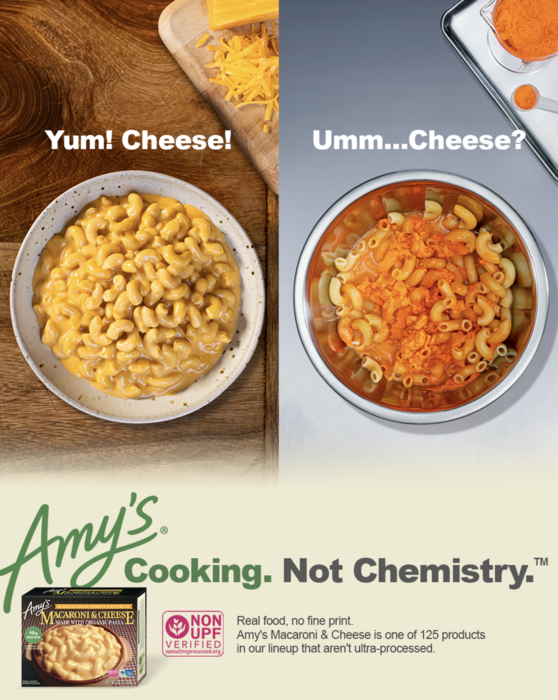
Commissioned by Amy’s Kitchen and conducted independently by a leading health economist, the analysis examines costs tied to healthcare, lost earnings, long-term care and reduced life expectancy
Companion survey finds Americans underestimate how much ultra-processed food they eat by more than three times
Americans who eat a diet high in ultra-processed foods face an estimated $359,836 in additional lifetime costs per person compared to those with a diet low in them, according to a new economic analysis.
The analysis is the first to put a dollar figure on the broader long-term toll associated with a high-ultra-processed foods diet, looking beyond what consumers pay at checkout to account for increased medical expenses, lost earnings, long-term care and the economic impact of shorter life expectancy. It was commissioned by organic food company Amy’s Kitchen and independently designed and conducted by health economist Lindsay Allen, PhD.
“Especially in this economy, people tend to think about the sticker price of food, not the downstream cost of eating it,” said Lindsay Allen, PhD, health economist and founder of Proven Policy. “There are many invisible costs associated with eating a high ultra-processed foods diet over time, including a shorter life expectancy, which carries a sizable economic cost of its own.”
The estimate is rigorous and intentionally conservative as Allen evaluated a broad body of research on conditions associated with higher ultra-processed food consumption, but included only five backed by the strongest available evidence in the final calculation, excluding potential costs where the evidence was less conclusive. “We deliberately erred on the side of leaving costs out rather than including health outcomes that didn’t clear our evidence threshold,” continued Allen. “As research on ultra-processed foods continues to grow, estimates like this may only be the tip of the iceberg in understanding the full economic toll.”
The findings arrive as Americans sort out what the term even means. The United States has no single official definition of ultra-processed food, and researchers commonly rely on the NOVA classification, which the analysis follows.
"People talk a lot about what it costs to eat well. Far less attention goes to what a diet high in ultra-processed food can cost over a lifetime," said Paul Schiefer, CEO of Amy's Kitchen. "To our knowledge, no other food company has invested in an analysis like this, and most have little incentive to do so. People deserve to understand the costs hidden behind the choices they make. What seems cheap at checkout can have much higher and more consequential costs later.”
Americans Underestimate How Much Ultra-Processed Food They Eat
A companion survey of 2,000 Americans by Talker Research, also commissioned by Amy's Kitchen, suggests many people do not know how much ultra-processed food they are eating. Nine in 10 respondents are eating ultra-processed foods without realizing it. Furthermore, respondents estimated that 16% of their diet is ultra-processed, yet CDC data shows ultra-processed foods account for about 53% of adults' calories.
Confusion about the term runs deep. More than a third of respondents (37%) believe any level of processing makes a food “bad,” and half aren’t confident they know the difference between “processed” and “ultra-processed” foods. Sixty-one percent believe ultra-processed foods are too common to avoid even if they tried.
Not All Frozen Foods Are Created Equal
That confusion extends to the frozen food aisle, where 45% of respondents consider frozen foods as unhealthy as, or worse than, ultra-processed foods like cookies and chips. What that perception overlooks is that frozen foods can vary widely in their ingredients and how they're made.
Earlier this year, Amy’s Kitchen became the first frozen food brand to earn Non-UPF Verified certification. The independent standard from the Non-GMO Project evaluates how ingredients are processed as well as what is on the label, and includes nutritional standards such as limits on added sugar. Amy’s now has the largest portfolio of Non-UPF Verified foods on the market, with more than 125 certified products representing nearly 90% of its offerings.
"We have always cooked the way people cook at home, only in bigger pots, so when the Non-UPF Verified standard arrived, most of our menu qualified without a recipe change. Because these choices can be so consequential, shoppers should be able to see and trust what's in their food, and how it’s made, in a few seconds at the shelf,” said Schiefer.
Finally, respondents said knowing the hidden lifetime costs could change their habits. Forty-two percent would cut back if they knew ultra-processed foods could cost them more over time, and 69% would pay more for higher-quality groceries to reduce their long-term health risk. Asked who bears the most responsibility, 28% said food manufacturers, ahead of retailers, government and themselves.
Amy's Kitchen is making the full report, including the conditions Allen considered and excluded, along with the calculation workbook and the survey results, available to anyone upon request.
The findings are part of Amy’s Kitchen’s “Cooking. Not Chemistry.” campaign, a nationwide effort challenging Americans to rethink ultra-processed foods and how their food is made. Through provocative creative, experiential activations and consumer education, the campaign aims to spark conversation about what goes into our food while reinforcing Amy’s long-term commitment to traditional cooking methods, transparency and long-term integrity over shortcuts.
About the Economic Analysis
Health economist Lindsay Allen, PhD, of Proven Policy analyzed the lifetime costs associated with consuming a diet higher in ultra-processed foods. To calculate the lifetime toll, Allen compared an average American in the top fifth of ultra-processed food consumption with one in the bottom fifth. The analysis was guided by a 2025 umbrella review (Barbaresko et al.), which assessed the strength of evidence linking higher UPF consumption to more than 30 health outcomes. From these, Allen selected the five conditions with the strongest links to UPF: type 2 diabetes, heart disease, colorectal cancer, depression and Crohn’s disease. Then, she combined the increased risk associated with each condition with its estimated lifetime financial cost. Conditions with weaker evidence (such as those that have not been studied in depth) were excluded, to avoid artificially inflating the result.
Of the $359,836 total, an estimated $21,417 comes from additional health-related costs, including medical care, long-term care and lost earnings. Diabetes accounts for 76% of those health costs. The largest share of the overall estimate, approximately $338,419, reflects the economic value associated with roughly 10 months of shorter life expectancy.
The model assumes a 20-year-old American maintains the same relative level of ultra-processed food consumption throughout adulthood. Future costs were expressed in today’s dollars using a 2% discount rate. A simulation model was rerun 1,000 times using different assumptions from the evidence base, with the estimate remaining above $200,000 in 98% of runs. The studies underlying this analysis are observational, so they can show that higher ultra-processed food consumption is associated with worse health outcomes, but not that it causes them. No long-term clinical trials have yet tested whether ultra-processed food causes disease.
Survey Methodology
Talker Research surveyed 2,000 general population Americans with internet access. The survey was commissioned by Amy’s Kitchen and administered and conducted online by Talker Research between September 3 and September 8, 2026.
Learn More
Tagged companies:

