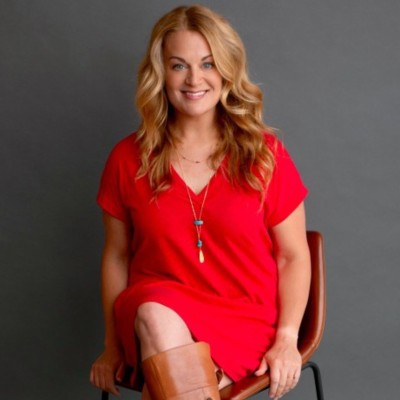
Hello, and thank you for joining us.I am Melissa Travers, Director of Community here at BevNET & NOSH, and I am pleased to welcome you to The Nombase Podcast.Don't forget to check out nombase.com, BevNET's platform built for the CPG community, and it's where you can find episodes of this podcast and so much more.Today on The Nombase Podcast, we are chatting with Lauren Martin, National Retail Activation Manager of Chomps, 100% grass-fed meat sticks, to teach us the real-world art of retail activation.Lauren has worked with some of the most notable brands in Better4U's CPG, shaping merchandising and activation strategies that drive trial and velocity on shelves.Over the last couple of years, she's helped fuel Chomps' explosive growth, and we are going to find out exactly how she's done that by activating with intention.Lauren, I'm just so excited to have you here today.Thanks so much for joining The Nombase Podcast.Thanks, Melissa.That was quite an intro.Appreciate it.We do what we can.Well, first, let's talk a little bit about Chomps because as we were getting ready for this interview, you pointed out that Chomps has been around a lot longer than a lot of people thought.It's not an overnight sensation.So tell us a little bit about when Chomps was launched and what that evolution has been like as a brand to be the Chomps that we all know today.I think that one of the biggest things that I get asked is how long has Chomps been around?And people are often surprised to know that Chomps was actually founded in 2012.I think a lot of people think of us as a newer brand because we've had really explosive growth, really post-COVID more than anything.But the brand was founded by Pete and Rashid in 2012.And we really got our big break with Trader Joe's with a massive PO in 2016.And then it was growth from there.But really over the last few years, we've seen the team grow massively.I was hired in 2023 as I believe number 68 on the employee roster.And now we're at over 150.So not only are we growing our team massively, but just the brand.We're growing in every channel, we're everywhere.We hear so often that it's better to grow slow and smart than it is to try to be everywhere at once.Do you think there's something about the work that Chomps had put in up until say a couple years ago that made the team there feel like they were ready to really take it to the next level?Yeah, I think just laying out the foundation, seeing what works, figuring out a strategy with what retailers and what channels to invest in, and where to really invest in on the team.And it was really slow and intentional, I think, up until a few years ago.And then as we've grown, as we've increased household penetration, we've been able to grow in other areas that we weren't able to focus on in the beginning.Well, they certainly put their resources in the right place when they hired you.You've been at so many amazing CPG brands.You were at Kind, you were at Justin's, Lily's.Can you walk us through what your career has looked like?Because really, when I took a look at your LinkedIn page, I thought, wow, this is really, really impressive places that you've worked.Yeah, thank you.I've been fortunate to work with some of these really iconic brands that you mentioned.And I kind of fell into CPG in an unconventional way.I actually started my career as an educator, teaching high school, for about a decade, and was doing fitness and learning about healthy eating just as a side gig, as a lot of teachers have a second job.That was my side gig and started blogging about it and was able to form relationships with some of these great CPG brands through that.And when I moved to Colorado, let's see, 13 years ago, I just fell into this great opportunity on the field marketing team with Kind.Didn't know it was gonna lead to anything.I actually thought I was gonna pursue fitness full-time or go back to teaching, but just loved the enthusiasm for the brand.What I was seeing out in the market, I was out doing demos, working at events, and just really fell in love with CPG from there.And was fortunate enough a few years later to get a role with Justin's where they developed this retail activation program.And I was able to lead it.And that led to Lily's, which was eventually acquired by Hershey.And then now this incredible opportunity with Chomps.Well, all of those brands obviously have seen so much success.And really, I feel like they hold this place in CPG that so many brands that are evolving and emerging now are hoping to get to.Can you walk us through kind Justin's and Lily's and tell us, what do you think they did right from a retail activation perspective?I've always said that I thought kind was the gold standard for field marketing.And that approach has changed over time with that brand.But when I was part of it, it was kind of similar to what we're doing at Chomps now.Really making regionally focused teams and getting out there in the market and just getting everybody to try the product.That was really the big priority and the big focus for kind.Moving over to Justin's and Lily's, it was more about merchandising.And demos were a little bit more secondary in that.Not having an in-house team, but hiring third parties where we felt that they were needed.But prioritizing working with our broker partners, using their field teams for merchandising, and then hiring out third parties where we needed that help.So at Chomps, we're combining the best of both worlds, kind of both arms of what Retail Activation is all about, which is the merchandising piece, and then the sampling piece.And we've really built this great program from the ground up.Well, we definitely want to get into that.So please set the stage for us a little bit.What did Chomps' Retail Activation Strategy look like before you came on?And how have you changed that since you've been with the brand?When I joined the brand back in 2023, there was, the foundation was laid out, and it was a really great foundation.And I think it was really built on the experience of a couple of individuals for what had worked with retail activation with other brands in the past.But the biggest thing was it was a real blanket approach to retail activation.So it was hire in every metro area, team members, work with all channels, and not really dialed in as much into specific markets, specific retailers, and really building the team in those specific areas where it was most needed.The other thing was we really didn't realize in the beginning that your demo sales in one region might be completely different than another based on the retailers that were there.And then also, just the abilities of what you can do with merchandising.They're different in regions, they're different with different retailers, and we've really learned that over time.So the biggest thing that has changed with the program is we're a lot more dialed in.We're a lot more focused on specific goals in specific regions and partnering with specific retailers to get the best success.We look at things a little more holistically in terms of how to incentivize the team and not just focus on the numbers that we're seeing in demos, holding everyone to the same standard.And we're dialed in a lot more to a specific channel strategy and mostly supporting the grocery and natural channels.We're going to get into so many of those things over the course of this conversation.Your comment about understanding that different regions demo sales may differ.What did you mean by that?Do you mean the number of units that you can sell during a demo and then the post lift in velocity?What did you mean by that?Yeah, great question.I think that one of the first things that I noticed is if we had a goal and let's just say a hundred units that we wanted to sell in a three hour demo period, it was a lot easier for our team members in Southern California to sell that number of units in a demo than it was maybe for somebody in the Mid-Atlantic, just based on the availability of retailers.Because Mid-Atlantic is so conventional focused, we are just not seeing the same velocities in that channel as we might see at an Air One or a Sprouts in Southern California.Let's dig in a little bit into how you dedicate manpower to the different buckets of retail activation.So you said it's merchandising and demos.And let's start by taking a look at internal hires versus external.How do you manage that for each of the two pieces of retail activation?Yeah.So our team, I think that we really do it in the best way possible to have kind of the best of both worlds that we have a really strong internal team.And then we source out with additional third-party vendors, where we can't have that presence, or we just need a much larger program to support.So we have, let's see, I think we're at about 24 team members nationally throughout the country.And we have focused on specific markets where we do really well, first of all, and that's been a lot of trial and error, but also where those anchor retailers are that we see the most success in and where we really want to support.So we dedicate their time to merchandising and demos.It really depends on the region.Again, somebody in Southern California might spend a lot more time sampling and doing demos, and a little less time focusing on merchandising, whereas somebody in Florida or the Mid-Atlantic or the Northeast, they're going to be more focused on that merchandising piece, just because the retailers that we really want to support demos in might not be as available in those areas.So that's how we do it with our internal team.And then we focus third-party demos on needs of the retailer several times throughout the year.And that could be 100 demos, 200, up to 500.We focus that around new product launches, and then also as an arm to support specific retailers to help get a new product in.So when you talk about the needs of a retailer, certainly there are times and places where the product just needs more support, but also oftentimes retailers will ask you to do certain marketing programs, to do a certain number of demos.So is that a place where you tend to use third-parties, especially if you don't have team members in that area, if you know that it might make a good bargaining chip for something, or you know that you need to show the retailer some love in a certain period of time?Yeah, absolutely.You know, one of the things that I always find really interesting is that there's a lot of retailers that don't want our team to come in and demo.They have just a list of preferred vendors.That's the only teams that you can use.And that really leaves us with just a few choices of who we can partner with to support those stores.But at the same time, we don't necessarily have the manpower to support say, like a croaker or a really large retailer that spans across a larger geography.And that's where those third-party demos come in really handy.So if you have a Chomps team member going into any store location, would you say that they're usually executing some kind of merchandising activity along with the demo activity, or sometimes do they just go in and merchandise because it may not be a retailer where they want you to use your own people?Yeah, that's a great question.We have, we call them missions for the store-focused visits.So a lot of those visits are specifically for merchandising.So that's going in and just checking compliance, auditing the shelf, making sure the product's there, the price is correct, if there's a promo that it's executed.And then if they can gain additional placements during that visit or additional facings or any kind of win at retail, that's a bonus.But another really important piece of that is just connecting with those partners in the store.I think our team is always looking for, who are the decision makers in the store?How can I connect with them?Is that the grocery team lead?Is that the store manager?But also, who's going to have influence over the customer?So I always encourage our team to connect with the front end, to give them swag, to make that connection, because they're going to be a great advertisement for us, for all of the consumers coming in.So to go back to your question, that's really one of the types of visits that our team does.And then the other, of course, is an in-store demo, which are typically about three hours.But in that demo, they're merchandising as well.They're looking to gain any of those wins at shelf, whether it's an additional placement, having a shipper, anything like that.And then again, of course, making those connections with the store.Are there any particular retailers where you feel like it is easier for your team to make those strong relationships in store?Yeah, I think just broadly the Natural Channel seems to be a little bit easier, a little more flexible.Any of those smaller independent retailers as well, they have a lot more flexibility, but even the big guys like Whole Foods, we can have a lot of wins there.And the team has a great time doing demos as well, and they see a lot of wins.Okay, so you mentioned that your retail activation team member might go into a store and see that a promo isn't up.So what do they do?Then do they talk to the grocery buyer and ask for tags to be printed?What do they do in those situations?Yeah, they typically will look for the grocery manager first, and they'll be able to pull it up in their own internal promo calendar and make sure that it's valid.And often our team is able to get tags printed up on that visit, whether that's asking to have them printed, or actually standing there while they're printed and physically putting them on the shelf.It really depends on the retailer.And that brings up another really important relationship that our team looks to make in the stores is with the scanning coordinator, so that they can always make sure they know who is the one who's going to get those signs and those tags printed upon approval, that that promo is valid, or that the pricing needs to change, or any needs like that.You know, when I think about the amount of funding that a brand like Chomps probably has to put towards promotions, if you're running promotions with retailers and they're not being activated, that's a huge, huge waste of money.Do you have any idea what your promo execution success would be like if you didn't have people constantly going into the stores and making sure that the promos that you're paying for are actually being executed on shelf?Yeah, I will say from experience, it would be a lot less.I think about an example with a former brand where we actually did a whole audit program for a large promotion that we were doing.It was a new year, new you program.We paid a lot of money for this off shelf.And we had our team go in to every single store location, just audit to see if that off shelf was executed, if the promo pricing was correct.And we found that it was just over 50 percent that was executed for not the pricing so much, but for the display.And anybody who has been in sales and CPG knows that those off shelf prices are not low.So you want to make sure that that program is being executed at 100 percent or as close to it as you can get.Wow, that's completely insane.What other activities do your team members do at the store level to support any promotions that you are running?Yeah, I think that one of the big things, because we don't necessarily pay for a lot of off-shelf displays, because we're a pretty established brand, and I would say that's something that years prior, we really did prioritize.But as we've become more well-known and have these really proven sales at retail, we've really leveraged our team to gain additional PODs.That's something that if you're on promo, it's a lot more likely to happen.If you're not on promo, giving coupons out or adding in a demo, something to drive trial and support sales for that off-shelf, it's just another layer and a tool that you can use to get those additional displays.You use the word PODs.Could you explain that?Yeah.Points of distribution in the store.So anything, you have the home set where we live, we're in the jerky set.And then anything else in store, whether you're at the register, you're on an end cap, you're on a clip strip hanging somewhere, anywhere else in the store is an additional point of distribution.And did you also say that when you're on promotion, that's also a good time to perhaps get that additional POD?Absolutely.I think that's when the retailers are a lot more likely to give you that space.When consumers are shopping, they're looking for those sales tags.And depending on which retailer it is, if you're looking at HEB, people are looking for that big yellow tag hanging, or that Amazon Prime tag at Whole Foods.And consumers are really conditioned to look for that.So the more places that you can have that appear throughout the store, the better your sales are going to be.So if you send a person into a store, you're running a promotion, maybe it's HEB.How do they ask that team for the extra display?Do they pick out the place where they think it would make the most sense?Do they already have the additional product with them?How does that whole process work?Yeah, that's a great question.And I will say it's really store by store.Every store, even if it's the same retailer, it can be different.And the number one thing is establishing those great relationships with the grocery team, because they're going to be the decision makers for that.But also having proven sales, if that retailer already knows, oh yeah, Chomps sells like crazy.You know, they might be like, where do you want me to put it?And then you might not get that in another store.They might not be interested in another additional point of distribution, or they might be super by the book and want you to pay for that off-shelf display no matter where it's at.But when our team goes in, they're looking for where does it make sense for Chomps to live?Does it make sense for it to be at the front end?Because our individual sticks, they might be more of an impulse purchase.So if you're at the register and you see those sticks there, you might just grab one really easily.So you want to make sure that you're not placing the product where it might be more of a planned purchase.So say where you're looking at your grocery list in the baking aisle or in canned food.Something that doesn't really make sense with the grab and go.So we're always looking for those best opportunities of where to have secondaries.And it's really anywhere that that impulse purchase lies.And I would guess that if you have something like a clip strip or a shipper, would that be an easier thing to convince a retailer to let you leave behind you than clearing out extra space on another shelf?Yeah, it really depends on the retailer.Clip strips are really easy to hang up and you can put them anywhere and that's the beauty of them.A shipper, it's going to take up a lot more space, even though we have pretty slim, clean, beautiful shippers.There are certain retailers that might have a clean floor policy and they don't want you to leave a shipper behind.But it's something that we have because we're a shelf-stable item.It's a really great tool to use and it's a great thing to be able to leave behind at a demo or unpack an empty one at a store visit and then fill it with open stock.That is such a brilliant tip and it was something that you had mentioned when we were discussing this topic earlier.But when your team goes in to do a demo at specific retailers, the ones where they could leave a shipper behind, they'll take a shipper with them to the demo.Of course, consumers can grab the product right off the shipper, but then they leave it in the store and then you've gotten yourself an additional placement for the cost of the shipper.Exactly.What we also typically promise when we leave a shipper behind is that we'll return to make sure that it's constantly filled.What we've also done with shippers and the beauty of the portability of them is we might put it in one place when we're there and then we might move it to a different location to see how it does over there.And that lets you see where really the best placement is going to lie for that shipper and eventually it might just live there or you can keep going in and experimenting where the best placement is.Do you assign your team members to regions, to retailers?How do you allocate their labor when there are so many moving parts?Yeah, and we have a lot of retailers, so that's a big task.So, you know, we work with our account managers to see where we have new item launches, first and foremost, and any of that merchandising activity is typically dedicated to those retailers to make sure that the product is on shelf, that it's ordered correctly, it's packed out, the pricing is correct, and everything looks good there.And then we usually layer an additional level of demo support on that, too, for any new items.And aside from that, where we have promotions, you know, we might have a need from a certain team member to go in and blitz out any store location that they have just to make sure that something is looking correct there, that our shelf is looking good, if we need pictures of the set for a meeting, anything like that.So it's really, I think, prescribed by our account managers.And then we just kind of sent out the direction to our team from there.If you were at a very emerging brand, you know, maybe they're at Whole Foods and some independents.Do you think it makes sense to have a full-time retail activation person?Do you do that fractionally?Any thoughts on how a brand who is really early on in their journey should start that process of making sure that their retail activation is on point?Because everything you're telling me says that it's obviously such an important piece of the business.And I think especially the note that you had about promotions where you may be paying, you know, $50,000 and only 25,000 of those are actually being used.Any thoughts on how an emerging brand might be able to implement some of the strategies you're describing with very limited resources?Yeah, I mean, I'm a little biased because I think retail activation should just be the backbone of any sales and marketing program.You know, I often say we're really the unsung heroes, I think of the industry because we don't necessarily have those great numbers and KPIs to share.A lot of it is based on relationships and just lifts kind of after the fact of where the promotions were executed or the demos.But I really do think that if a brand is able to, to just start with one ambassador, start with one region.If you are regionally focused, get a really great full-time team member to do demos and merchandise and just see what the lifts are and the wins at that store, at that retail chain, in that region, whatever your focus is, and then go from there.Third parties are great, but you're not going to get near the same care and execution as if you have a full-time dedicated ambassador.So I think if you're able to start with one, see how it goes and grow from there.One of my favorite Taste Radio episodes was with Caitlin of Simple Mills.And she was saying when she launched Simple Mills, she would do demos all weekend long.So one Friday night, three on Saturdays, three on Sundays.And it sounds like so much work, but I mean, of course, it really does help to have somebody who's passionate about the brand and passionate about the growth behind that table, because those relationships you're making with the stores, with the consumers, they're so important in those early stages.Absolutely.And I love to hear that.I love when I hear that a founder was out doing all the demos or that it was one team member who started and was doing demos every single day.That's so important.And if you can really speak to the brand passionately, like you said, that's going to come through to the consumer.And that's really the biggest difference we see when you have your own internal team who's just dedicated to your brand versus an ambassador that's working for maybe 50 different brands in a month and doing just back-to-back demos for different brands at a retailer.All right.Let's talk about packaging.Chomps has iconic branding, iconic packaging.How does that packaging help support location optimization?I said that I had a big brand crush on Chomps before I started.I was such a big fan.And I think it's because you can't miss the product on the shelf.We use different colors of the rainbow.Our logo is simple and bold, and it really stands out.And that was really the approach when designing the packaging.It's really easy to merchandise too, because of the size of it, just the way that our caddies are packaged.And then, of course, we have our pouches as well, which also really stand out and keep the branding consistent with the individual sticks.Sizing is such an important issue, especially with a product that is fairly long.You know, you don't necessarily want to be at the top of the shelf.You don't really necessarily want to be at the bottom.You kind of want to be in people's sight lines.So, how do you optimize the size of Chomps packaging, understanding how retail shelves are typically built?We've had several changes over the size of the packaging throughout time.And I think it's something that will consistently evolve with because certain retailers have different shelf heights.I know with Publix, you know, their shelf heights are shorter than a lot of other retailers.So a lot of brands have had to make changes based on that.We also have to be conscious of, especially with our pouches, are they going to live in a case?Are they going to be hung on a slat wall?Because they have that ability for both.And then with our caddies, you know, it's a slim, tall package, which usually lends itself really well to different retailers.And we have a great tear-off front where you can still see all of the branding.The color isn't lost.Everything that's great about our packaging stands out on shelf.But those are the decisions by our team that have really been well thought out over time.And then changes have been made every time that they're needed.Are there any tried and true tricks for figuring out what the size of your packaging should be?Understanding that, you know, eventually you'll be in an assortment of retailers and, you know, maybe Publix along with some of the other retailers who don't have, you know, so short of a shelf.Any kind of tried and true tips or tricks that folks out there should think about as they're designing their packaging and then their secondary packaging?Absolutely.I mean, height and width, I think, is the number one thing.Like, we've had our team out there with rollers measuring shelves before, and that's really important information to gather because it can vary depending on the retailer.So not just that.I think the height is the number one thing that maybe brands are thinking about, just the shelf height.But I think the width is really important too.We've seen other jerky brands that have a much wider caddy, and you're just not able to place as many on the shelf as you could with a more narrow caddy like we have.So if we're thinking about size and we know that we're going to either be launching at, let's just use Whole Foods as an example, or we want to get into Whole Foods, would you then sort of design the height of the product to suit that particular retailer?Absolutely.I think again, if you were an emerging brand and having different iterations of your packaging, trying to figure out what the best size is, again, go out there and measure it with a ruler.Look at what other brands in the category are doing, and look at who's fitting well on that shelf.Who looks like, if they have a pouch, is it folded over?Are you missing half of that package or the top third of that package?Because those are barriers with your brand.And also, with any barriers like that, the team, the grocery team, isn't as likely to restock your product because it's more work and they're just not going to be able to fit it on the shelf.Any thoughts on what case pack sizing looks like ideally?Yeah, I think that if you have the approach that you want to be able to display the product in the case, then you need to make sure again that it fits on the shelf.And that's really, I think, that's kind of the forefront of what you should consider when you're designing your case is make it display ready.Make sure that it's something that can support what's inside the package as well.So I know that there's a lot of different thoughts on that, but for us, it's more, we want to make sure that the case itself is nice looking, that it can have a tear off front, and then that can be the display.Keep it as simple as possible.Well, keeping it simple sounds like a bit of a challenge, just sort of understanding all the moving parts here.So in order to simplify things a little bit, and to be able to keep an eye on everything that you need to be watching, what do you think about software systems?Are there any particular systems that you've liked?And at what point in a brand's life does it make sense to start using one?Just to clarify your question, are you asking more about just like data collection for our team or for the broader team just to have sales data?Well, so it could be everything.Are your demo folks logging information into a system when they go in?Are they logging information about the merchandising activities that they have?How are you keeping track of all of the details that kind of occur when you have people in store?That's a really important point.I think just being able to collect data in the most efficient way possible.I personally have used Go Spot Check for several years with several different brands.I think it's a really great tool.I like that you can customize the questions in it for all of the store missions in any way you want.You can change them as often as you want.And then everything is uploaded into real time.So that's what we have our team do.And then we go in and we pull reports monthly so that we can capture all of those KPIs.We can capture photos, which is super useful to have.We have photos of shelves from every retailer that we're in.We have great before and afters, great off-shelf photos.And that's another really important piece, I think, that might be overlooked when you're just collecting data.It's just having that library of images too, of where you're out on the shelf, what looks good, what doesn't look good, what kind of problems you're seeing, and being able to communicate that back to the broader team.Are you having the folks who are going into the stores ask questions, you know, whether it's of customers during a demo or asking questions of the store team personnel?We have specific areas in our missions where you can input specific information that you receive from the store team or from a customer, just feedback.And we have this list of questions that they check off the box when they go in the store.But then there's an additional area that, you know, if there's feedback of Chomps does really well, you know, or, you know, if you do a demo between noon and two, you're going to see killer sales or, you know, Saturdays are really great for us.Just having any of those specific bits of information to store, we have that all built in to go spot check.What are some good questions for a retail activation team member to ask when they do a store visit?We always have them ask, first of all, how does Chomps do here?And, you know, generally we're met with a welcome reception from that, which is great.But also, just asking, how could we do better, you know?What can we do to support you?And finding out specific, you know, as I mentioned before, specific times or dates that sampling opportunities might be more successful.That's really great intel that you're only going to get if you're physically in the store and talking to a store manager or a grocery manager.But it's just really gaining that intel on anything that's occurring at the store that is working well, anything that we can support, and then any opportunities that they might have coming up.Well, it certainly sounds like Chomps' success is due in part to building great relationships with retailers and making sure that they feel supported, but also certainly your brand that is as concerned with profitability as any other brand.So how do you decide when and where to put more resources behind a region or retailer?Like is it for a launch?Is it because you have a high velocity period?Is it because maybe there's a retailer that's not doing as well as you'd like them to, and you need to move the needle a little bit?How do you decide where to put those resources?Yeah, that's a great question.I think that we look at it in a couple different ways.Definitely, where we have new items launching or new retailers coming on board.We want to make sure that we're showing them that we support them, whether that's through third-party demos or through our own team.We look at a calendar of what's coming up as a whole sales team, and then we talk about where do we need that retail support the most.And because we have really broad retail support from our own internal team, usually we're able to get into specific regions just with our team.And then if we're not, then we're using a third-party or a more broad approach to support those bigger retailers where we might not have just the manpower or we might have to use their own team.A little bit earlier in the conversation, you were talking about how you incentivize demo people a little bit differently, maybe depending on the region, maybe depending on the retailer.What are some of the ways that you incentivize folks who are in-store doing samplings?Yeah.We started it out just again, a blanket approach that it was, if you sell this many units, then you'll achieve this bonus.Then if you double that, you'll achieve this bonus.It was really great for some of the team that had those opportunities just for much higher velocities due to the retailers in their region.But then we were finding that it was really discouraging for the team members who maybe just didn't have those retailers where that foot traffic was there or the customer base wasn't there as much.We've really kind of revamped our program to not just look at demo sales, but look at, are your demo sales improving over time?We provide coaching to our team.We have a lot of support in if a team member might be struggling with their demo sales or just needs a new approach.We have experts on our team that provide that coaching to them.That's shown improvement over time really helped the team.But we also look at what are the merchandising wins?Because demo sales are great, but also did you close a void on that visit or did you land a clip strip?Were you able to place a caddy at the front end?There's so many different wins that are aside from demo sales, and we just consider all of that now when we incentivize our team.You know, it's so smart to do things that way, because the team member that may be having the most trouble is having trouble because they're putting new tracks in the snow, which is so, so important, especially at this stage of growth.Can you think of any things that you've noticed when your demo team members or folks who are doing demos need that coaching?Like, are there any sort of typical tweaks that are oftentimes recommended, or does it just totally vary from person to person?Yeah.I mean, we really make it prescriptive, I think, per team member now.But one of the first things I look at is, if you're not having these great sales at your demos, when are you executing them?What time of day are you doing?Because if you're first thing in the morning, people might not want to eat a meat stick at 8 AM.We usually encourage our team members to focus demos around lunchtime and mid-afternoon where it makes sense.And also, if you're going to get that lunchtime shopper, are they much more likely to grab a stick at the demo table right after they taste it?If you're having people come in in the evening, they've already eaten dinner, they're not necessarily going to be hungry and want to try something.So I look at what's the time of day, day of the week, and as I mentioned before, I think getting that intel from the grocery location itself, from the grocery team lead or the store manager, that's really important to consider in where you're seeing that success.But on the other hand, you could go into a store where you've always seen success on this day at this time, and the foot traffic is just not there that day, and that might be because of the weather or just thinking of an instance where we did an event at the Pearl Whole Foods, and it was during graduation at the university, and nobody was in their shopping because everybody was at the graduation.So, you know, there's outside factors that can determine that.So you just have to be aware of that, but use all the tools and the intel that you have from the store and your own experience to look at time of day and the day of the week first and foremost.You're making a very important point, which is that there's not necessarily a time and place for a successful demo.It's really about the time and the place for your product.Something like Chomps would be perfect for a lunchtime rush, but probably not great for ice cream because people are going back to work.So certainly you must need to experiment a little bit and not really take anything off the table to figure out where your sweet spots are.Yeah, absolutely.And I've been, I think, for me anyway, really fortunate to have worked with mostly shelf stable snacking brands where you can buy a Chomps stick.And if you put it in your car, it's not going to be damaged if you leave it there.Whereas like a chocolate bar or a frozen item, you're not going to buy that on your lunchtime trip where you're going to the hot bar at Whole Foods because you're not going to have anywhere to put it.So with Chomps, we really kind of lean into the fact that we're portable and that there really isn't a bad time to buy Chomps, but we just know where we see a little more success is really around that lunchtime rush more than anything.Then what are you looking for in the post sampling velocity data to help you understand that the demo is working or that it's not working?Again, it goes back to sometimes it's really hard to quantify the ROI of demos and merchandising.We look at the lifts during the actual demo itself, and they can be really great.But then we do look, are we consistently supporting that retailer?We're not just going in there one time and doing a great demo and then never coming again.So we're looking for just those continued lifts, not just through the demo period, but post.We plan a lot of demos around promo periods as well.So you're also getting those promo lifts and those post-promo lifts.But we're just looking for consistency, I think, and consistent growth with that.Well, you have been consistently amazing about sharing some really fantastic information to our audience about retail activation.Lauren Martin, National Retail Activation Manager at Chomps.Thank you so much for joining the Nombase Podcast.It was so great to have you here.For everybody else out there in the audience, thank you so much for listening to the Nombase Podcast, and we'll see you next time.That concludes another episode of the Nombase Podcast.Many thanks to Nate Brescia, our recording engineer, Ryan Galangue, our livestream coordinator, and Josh Pratt, our podcast editor.If you enjoyed the show, please leave us a review and follow us on your listening platform of choice.Want to be part of a live recording?Register at nombase.com/podcast to join the conversation.You can also watch and listen to past episodes on nombase.com.And don't forget to join our Nombase Slack at slack.bevnet.com for company updates, industry networking, and community discussions.See you next time.