Melissa Traverse:
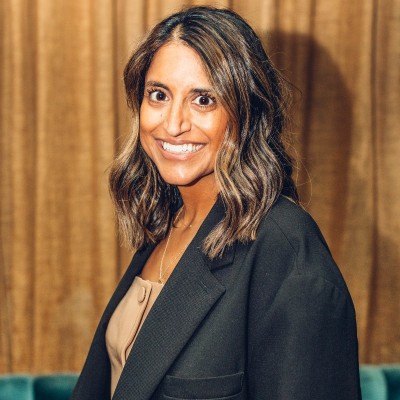
Hello, and thank you for joining us. I’m Melissa Traverse, Director of Community here at BevNET Inosh, and I’m so thrilled to welcome you to the Nombase Podcast. Don’t forget to check out nombase.com, BevNET’s platform built for the CPG community. That’s also where you can catch episodes of the Nombase Podcast.
Today, we’re talking to Brandon Lennox, VP of Finance at Lemon Perfect, Neha Soi, SVP of Operations at BERO, and Vivian Keena, CEO of Luxent, to discuss how fast-growing CPG brands can scale more efficiently by putting the right systems in place early. Implementing an ERP like NetSuite might seem daunting or even premature, but it can be a crucial move. As distribution grows and velocity increases, operations need to keep up. We’re going to talk about how Lemon Perfect and BERO approached that challenge, what prompted their decision to invest in an ERP, and why they chose a partner like Luxent to help avoid common growing pains.
Thank you so much, Brandon, Neha, and Vivian, for joining today. Let’s start off with a quick round of introductions so our audience gets to know you. Neha, please start us off.
Neha Soi:
Thank you so much for having me. I’m really excited to be here and have this conversation. I’m SVP of Operations at BERO and really excited to jump in. I have a unique background because I also served as SVP of Operations at Lemon Perfect, so I’ve been on both sides, learned a lot through the process, and built the supply chain at BERO based on those lessons.
Melissa Traverse:
Brandon, you’re at Lemon Perfect yourself.
Brandon Lennox:
Yes, so nice to be here as well. I’m Brandon Lennox, VP of Finance at Lemon Perfect. I’ve been here for five years—just hit my five-year mark. Neha actually interviewed me before that five-year mark, before I even started. And even before that, I knew Vivian and Luxent when I was at my previous company, Soylent Nutrition, another beverage brand. They helped us there too. I’ve known everyone on this call quite some time.
Melissa Traverse:
Vivian, great to have you here. You’re going to give us some of the details on how to use an ERP like NetSuite and how to implement. Thanks for joining us.
Vivian Keena:
Thank you. I’m excited and grateful to participate. I’m Vivian Keena, President and CEO of Luxent.
Melissa Traverse:
Neha, you were at Lemon Perfect and now you’re at BERO, so we kind of have a tale of two brands here with two different growth stories. Can you help us understand what was going on at Lemon Perfect when you first joined, and when was that?
Neha Soi:
I joined pretty early on—employee number seven, I think. We built the team and the sales from scratch. When we started, we were doing everything in Excel. My background is corporate, and Lemon Perfect was my first startup. Yanni took a chance on me, and I was so grateful, but I walked in and thought, “We’re doing everything on Excel—is this how we do it?” It was very different coming from big corporate.
As we scaled, things moved fast, as everyone knows in beverage. We realized quickly we needed a system. It was also during COVID, so a sophisticated ERP like NetSuite didn’t feel achievable early on. We went with a smaller ERP to support operations. Finance ran on QuickBooks, so the two sides didn’t talk. That worked for a while, but by year four, the supply chain had become very complex. We had multiple co-packers, raw materials, and growing transactions. We needed more. We ran an RFP and landed on NetSuite.
At BERO, I joined as employee number two or three and had the rare chance to build a supply chain from the ground up. I’d learned so much from Lemon Perfect and thought, why not start with NetSuite? Why go through painful transitions every time and break systems? The two things holding us back were cost and implementation—we couldn’t do it ourselves and needed a partner. I called Vivian and said, “I have this crazy idea. Could we start with NetSuite on a small budget?” She said, “Let’s think about it—yes, I think we can.” So we started with NetSuite from day one. It was game-changing for us and absolutely the right move for operations and finance.
Melissa Traverse:
Brandon, you went from spreadsheets to a small ERP for operations and QuickBooks for finance, which didn’t talk to each other. What was the scale of Lemon Perfect at that time?
Brandon Lennox:
We usually talk revenue more than doors. When I first joined, the company was coming off about $300,000 a year. The next year, in 2020, we did $3 million, and that’s when we put in that small ERP. QuickBooks was already in place. The next year we did $12 million. Still on QuickBooks and the small ERP. Then $27 million the year after that. At that point, we knew we needed something else. I had used NetSuite at Soylent and knew we’d need it at some point—it was just a question of when. Once we hit $27 million and were on pace for $50 million the next year, we couldn’t keep doing manual invoicing and emails. I was a one-person finance team, and it became impossible without NetSuite.
Neha Soi:
We fumbled a bit too. After the small ERP, we tried a custom solution that could integrate demand planning, but it just made things more complicated. If I could do it again, I’d go straight to NetSuite. We hesitated because of cost, but now I know starting early is worth it. That’s what we did differently at BERO.
Vivian Keena:
It was hard to get their time because they were in growth mode. Getting them in a room to set up and configure the system while growing rapidly was a challenge, but it was a balance we made work.
Melissa Traverse:
Brandon, you mentioned you knew you’d go to NetSuite at some point. Why?
Brandon Lennox:
Before Soylent, I was at Beachbody. We implemented Oracle there—way too big a system unless you’re massive. At Soylent, NetSuite worked incredibly well. Even now, brands get pitched by dozens of ERPs, but everything integrates with NetSuite. It just works. We’d used Luxent before, and I trusted the process.
Melissa Traverse:
Vivian, when implementing an ERP like NetSuite, is it even realistic to do it yourself?
Vivian Keena:
Companies know their business, but not the technology. You need a partner you can trust. Luxent has implemented systems in the food and beverage industry for 15 years, with hundreds of clients. We know their pain points, best practices, and how to make the process efficient. Brandon and Neha’s time was limited, so we focused on understanding their business and using time wisely.
Neha Soi:
NetSuite has so many options—it’s powerful but complex. At Lemon Perfect, we needed guidance on what we actually needed versus what we could grow into later. At BERO, it was a blank slate. Having someone guide us through that was essential.
Vivian Keena:
And it’s important not to over-engineer. Startups need flexibility. Everything changes—co-packers, 3PLs, partners—so you need a partner who can flex with you.
Melissa Traverse:
What issues pushed Lemon Perfect to finally switch to NetSuite?
Neha Soi:
Inventory inaccuracies and system glitches. Transfers wouldn’t go through, lot codes were missed. We started losing visibility, which is critical in food and beverage. We were moving from multiple co-packers to one, and we needed automation and EDI. NetSuite made that possible. It felt overwhelming at first, but Luxent guided us every step of the way.
Brandon Lennox:
The biggest issue was finance and ops systems not talking. We had to manually fulfill and invoice orders. Luxent took time to understand our setup and stayed flexible when we had to reschedule. They even jumped into our systems directly to keep things moving.
Melissa Traverse:
How did real-time inventory visibility change things?
Neha Soi:
With the old system, glitches meant we lost visibility. NetSuite doesn’t have those issues—it’s up to us to keep the data connected. Real-time inventory is critical for planning, forecasting, and cash flow. NetSuite also makes automation easier, especially with 3PL integrations.
Vivian Keena:
Having a partner helps make implementation less daunting. We had to scale creatively within a small budget, but it worked. Automation and quick insights justified the cost. Neha didn’t have to hire nearly as many people because automation replaced manual work.
Neha Soi:
Starting early lets you build your processes around the system. At Lemon Perfect, we had to rebuild everything mid-scale, which was painful. At BERO, we built processes on NetSuite from day one.
Melissa Traverse:
Vivian, how can early-stage brands approach using NetSuite given cost concerns?
Vivian Keena:
We created a scaled-back plan—simple and cost-effective. Neha didn’t want complexity that would slow her down. We provided the infrastructure and guidance so her team could take ownership. That reduced consulting time and cost. NetSuite works for both startups and enterprises, but implementation costs are what you need to manage.
Neha Soi:
I’d love to make this model the standard so emerging brands can start strong.
Vivian Keena:
Exactly. It worked for BERO, and it can work for others.
Melissa Traverse:
For brands who want to get in touch with Luxent—
Vivian Keena:
Visit luxent.com or reach out to me on LinkedIn, or email me at viviankeena@luxent.com. We can provide pricing, demos, or just talk through how complex your business might be in NetSuite.
Melissa Traverse:
Brandon, how does ERP cost balance with headcount and efficiency?
Brandon Lennox:
Luxent did a great job. Ongoing costs are manageable as we’ve grown. We got exactly what we needed and haven’t had to expand much. The implementation was an upfront cost, but it’s paid off. We’ve stayed lean—just two people in finance—and NetSuite lets us focus on growth rather than admin. Integrations like Ramp and Bill.com work seamlessly. Running a $50 million business with a small team shows how powerful it is.
Melissa Traverse:
Does having an ERP help with funding and investor conversations?
Neha Soi:
Absolutely. It signals sophistication and foresight. At Lemon Perfect, investors supported the move. At BERO, it set us apart. Investors see it as a sign of maturity.
Melissa Traverse:
And does it help you determine how much to raise and when?
Neha Soi:
Yes. With P&Ls in NetSuite, we can model, scenario plan, and pull data quickly. It’s helped us have smarter, faster fundraising conversations.
Melissa Traverse:
Vivian, what mistakes do brands make when implementing?
Vivian Keena:
They underestimate the scope. Food and beverage is complex—quality, tracking, and compliance all matter. Many try to run manually too long. Plan ahead, start simple, and choose a partner who can guide you through.
Melissa Traverse:
How long does implementation usually take?
Vivian Keena:
It depends on the team and scope. BERO took about two to three months. Lemon Perfect took longer because they were busier. Typically, it’s three to six months.
Melissa Traverse:
When should a brand make the jump?
Neha Soi:
Two key triggers: multiple co-packers and around $15 to $20 million in revenue. That’s when complexity demands a real system.
Brandon Lennox:
At $20 million, manual processes just don’t work anymore.
Neha Soi:
I still believe the best time is day one. But if not, make the jump before it’s too late—don’t wait until chaos hits.
Melissa Traverse:
Final thoughts—what should brands know before implementing?
Vivian Keena:
Find a partner you can trust—one who knows your industry and stays with you long term.
Brandon Lennox:
Pick the right partner and make time for the process. It’ll save you time later.
Neha Soi:
Find the right model for your brand and make sure everyone buys in. Leadership support makes all the difference.
Melissa Traverse:
Thank you, Brandon, Neha, and Vivian. Visit luxent.com if you’re thinking about implementing an ERP or just want to talk about what it could look like. Thanks to everyone listening. Visit nombase.com for more and we’ll see you next time.
That concludes another episode of the Nombase Podcast. You can listen to past episodes at nombase.com and join our Nombase Slack at slack.bevnet.com for updates, networking, and community discussions. See you next time.