Hello, thank you so much for joining us today.
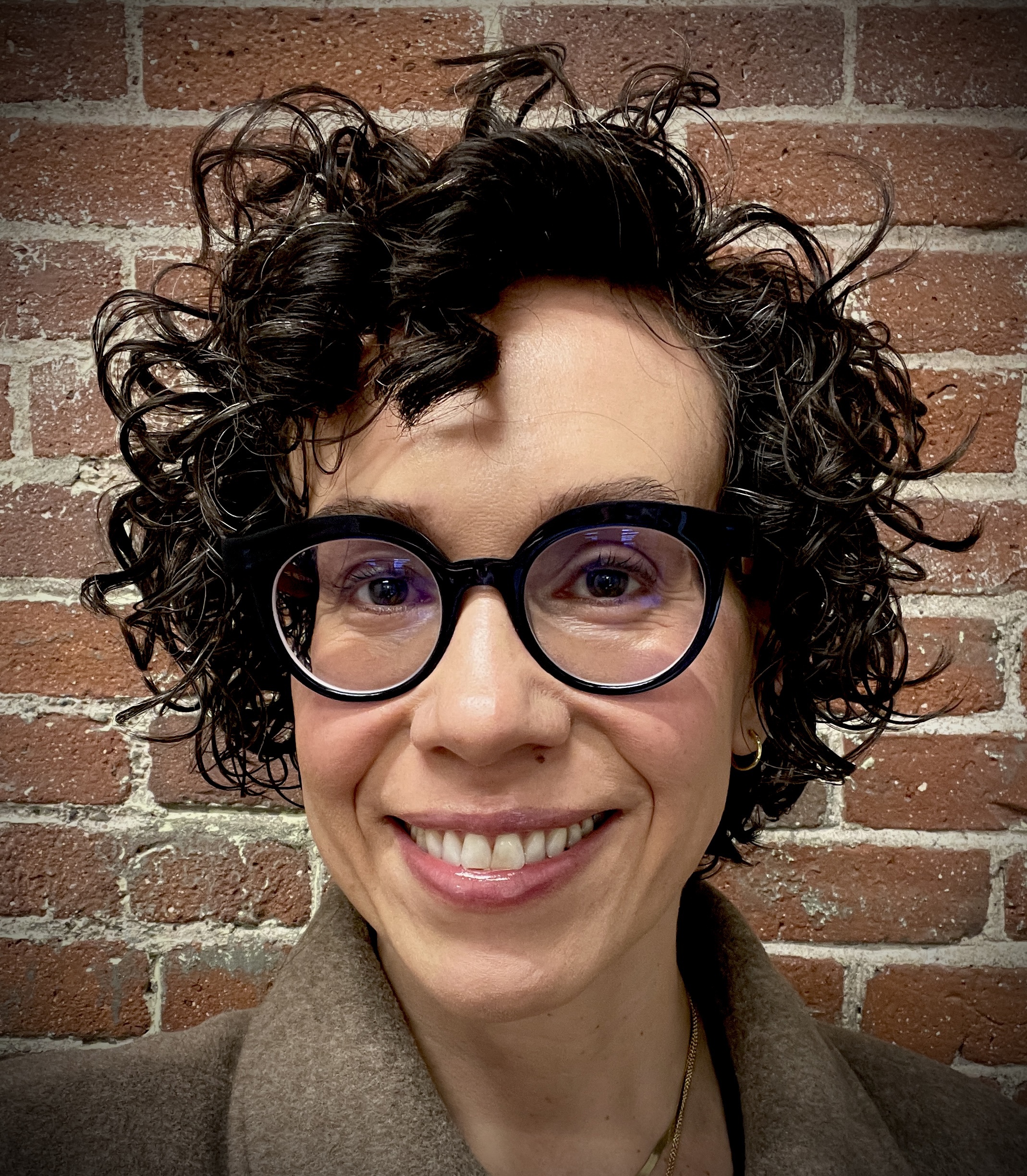
I am Melissa Travers, Director of Community here at BevNET and NOSH, and I am so excited to welcome you to the Nombase Podcast.
Don't forget to check out nombase.com, BevNET's platform built for the CPG community.
It's where you can find episodes of this podcast and so much more.
Today, we are joined by Alejandro González, Managing Partner and CEO of Redwood Group.
Redwood Group also contains Santatera, which is the food and beverage arm of the organization.
Their portfolio includes brands like Little Sesame, Tealupita, and most recently, Sunny, an allergen-free snacking brand they fully funded in 2025.
With a focus on growth signals, unit economics, and mission-driven innovation, Santatera has become known for moving quickly from pitch to decision and for helping brands scale through strategic partnerships.
Alejandro, thanks so much for joining.
It's great to have you on The Nombase Podcast.
It's a pleasure, Melissa.
Thank you very much for the invitation.
Let's start off by getting to know you and Redwood Group and Santatera.
How did you come to be in the position that you are?
What has your past experience looked like?
My first work experience was actually as an entrepreneur.
So I founded, wow, a long time ago, almost 20 years ago, a brand of chili powder mixed with worms, very Mexican product.
It's called Worms Salt.
And it's actually made with worms.
So I started that company with a few friends back in the day.
We eventually sold that company and I started a career in investment banking.
So I worked in investment banking for a few years.
And in 2017, I met my current two partners, Jean Paul and Marco, and they had this project of starting the first venture capital firm in Mexico, outside of Mexico City.
We're based in Guadalajara.
So they had this project of basically founding the first institutional investor in the region.
And they invited me to the project back in the day we met in an accelerator.
So they were managing an accelerator.
But maybe as today, it is one of the largest accelerators in Mexico.
And I was there working as a mentor for the financial part of the program, and that's how we met.
And they invited me to a project.
They told me that, hey, we want to put a venture capital fund to invest in technology companies in Latin America.
And I was like, dude, I've tried for years.
It's impossible.
Mexicans don't like to risk their money in this risky bed with entrepreneurs.
It's impossible.
I'm an angel investor myself.
So I knew that it was very hard.
And they told me like, hey, you don't get to say this is impossible because we already did it, you know?
We already begun doing it.
We already have two investments and the project is growing really fast.
So we want to invite you to come with us.
And they can meet me.
Like they are amazing people.
And I'm very happy and very proud to join them back in the day.
And so far, we have grown from having ten investors in our first fund to over 60 investors now.
$8 million in ads under management to over 250 now.
Three funds, different verticals now.
As you know, we do not only invest in technology.
We have now Santatera to invest in food and beverage.
We have Tactica to invest in sports and equity.
We have other verticals that we invest on.
And we have a team of almost 40 people.
So we have grown a bit since then.
And yeah, we're very proud to be here now, investing in the coolest and hottest brands now in the USA.
Santatera is a US firm.
We have an office in San Diego.
And we used to have one in Austin as well.
So we're very active there.
But of course, with our Mexican heritage.
I have to ask the chili powder with the worms, was it flavor?
Was it taking the protein trend along before that even happened?
What was that all about?
It's all about the flavor.
It's a very traditional flavor.
And it is a tradition that comes with mezcal.
So in Mexico, mezcal is an ancient tradition.
But it's normally like all people they drink mezcal with a piece of orange and warm salt.
That's like the traditional way of drinking mezcal, with warm salt, a piece of orange, and you drink it and you sip it.
So eventually it evolved, and it is used in many other dishes as a seasoning.
You can use it for salads, for soups, for many other things.
And eventually, what probably was more valuable when we sold it, it wasn't the product per se, but the distribution, because distribution in Mexico is hard.
And we built a small distribution for specialized stores where they sell gourmet or specialized food and beverage products.
And that was probably the most valuable part of what we built with that company, and eventually sold to one of our suppliers.
And I'm sure distribution comes into play when you're looking at potential brands to invest in now.
You mentioned that traditionally it was difficult to get investors to participate in projects that were maybe a little bit unknown in the food and beverage space.
How did you overcome that hurdle?
How do you pitch your investors so that they feel safe investing their money with you?
There is not like a secret sauce.
What I think it have worked for us is making them part of the process.
So we are sometimes criticized because of this, but it's part of our DNA that we share with our investors everything that we do.
When we receive deal flow from them and we share deal flow that we get, that is probably strategic for them.
We allow them to co-invest with the fund.
We invite them to the investment committees.
We ask for their support in due diligence processes.
So we make them part of the process and we respect that the money that we invest is not ours, it's theirs.
So the fact that for us, our philosophy is that we are just administrators of the money, but it's their money is something that is not very common in the venture capital.
It's the reality, but it's not very common that you have GPs with this mentality.
Of course, they don't legally make the decisions we are the GPs, but we invite them to make the decisions together, and that is something that helps us a lot because eventually, it evolves to value for the portfolio.
So you can ask all the companies that we have in Santatera, the way we help them the most is not only with the money, but also with the connections that our investors have.
So I'm looking for a broker.
So I call one of the investors, say, who's your broker in the United States?
The broker is this one.
Can you make me an introduction?
Yes, I connect.
So those like boots on the ground and like actual experience operating these kind of companies is not only valuable to the fund, but also for the portfolio companies.
And that is how we get them to be interested and excited about the things that we do.
Partnership is such a huge part of Santatera's story.
And you're able to help brands, not only with financial resources, but with other resources that can help move their businesses forward in the way of relationships, that kind of thing.
Can you talk about some of the partners that you have?
For example, you work with Chosen Foods and how those relationships benefit the brands that you work with?
I don't know if they would like to tell me that I say all their names, but I can tell you that all of our partners have a very strong experience in the food and beverage industry, in very different parts of the supply chain.
We have investors that have maybe a brand, like Chosen Foods that you mentioned.
Maybe they have production capabilities, manufacturing capabilities, they have, I don't know, like co-packers for crackers or cookies or bars or, you know, different kinds of products or beverages.
Sometimes they have distribution capabilities.
So one of our investors is maybe number one or number two distributor of Mexican products in the USA.
So we can leverage their capabilities to help the companies in their portfolio.
We have other investors that produces ingredients of different, for example, one of our investors is actually the supplier of real sesame for the chickpea and sesame.
It's very common that we end up having commercial relationships between portfolio companies and investors because of what they do.
Also, one of our investors produces tequila, and is one of the largest producers of tequila and agave in the world, and they are producing tequila for one of our companies.
So, that's other examples of how can we help other than with the money.
But also, something very interesting is that they can co-invest with us.
So, there is a few of the companies in the portfolio that probably they're raising, I don't know, just to give a number, $3 million and Santatera is investing too.
So, instead of going out there and finding another, like one more million into the wild, it's like, hey, maybe one of our investors want to co-invest with the fund and put the additional million or half of it.
So, that also brings funding capabilities or additional funding capabilities to Santatera.
And I think that's also strategic.
I was chatting with the team over at Sunnie recently and they talked about what a great partner Santatera is.
And it certainly sounds like the partnership that you build with your brands is a ripple effect from the partnership that you have with other folks in your ecosystem.
So, that makes so much sense.
Are there other ways that you support your brand?
So, do you help with corporate governance, strategic planning, corporate finance, any of those things?
I guess it's in a case by case basis because it also depends on the profile of the entrepreneur.
There are entrepreneurs that like to receive help a lot.
So, we can help them with all of the things that you mentioned.
When I was doing investment banking, I also did strategic planning, and my partner's background is doing industrial engineering for processes, and legal, and corporate governance.
Of course, we have all these capabilities, but it is not mandatory that we do that for the companies.
It's only if they need it and if they want it.
So, sometimes we're able to bring maybe independent advisors to the board, structure the rules for the corporate governments.
There's a company where we do the financial reporting for all the investors.
So, we help them with crunching the numbers, and design, and making it look beautiful, and be thorough of what an investor wants to see.
There's another company that we help with recruiting.
So, we have recruiting partnerships with other firms, that we have perks or discounts, and we put them together to find the right people.
We have an in-house team of food engineers.
So, we can help them find the right suppliers for the ingredients, co-packers for actually manufacturing the product, or looking at the recipe and the formulation to see if we can improve something in order to either make it more functional, healthier, or maybe just reduce cost.
So, we have done that for a few of our companies.
Also, we also do a lot of research.
So, for example, for one of the companies in our portfolio, they just released a new flavor.
And that new flavor was part of our research that we helped them with.
And it resulted in like which flavors have the more probability of success.
And we prepared that research for them.
And of course, the decision what theirs to make, like which is the flavor that we're going to release.
And of course, they know their business a thousand times better than us, but we can do that research for them and provide insight from what we're looking out there.
And I think that's also part of what we do.
So many of the things you just mentioned can be really expensive.
So I'm sure that the brands that you partner with are appreciative of that kind of help that can help them conserve the money that you give them and put it in other places.
We want to get inside your mind and inside the mind of Santatera for all of the folks in our audience who may be looking to partner with you in the future.
What are some of the signals that you look for when you're evaluating food and beverage brands?
I know that you have a focus on sustainability, ESG, climate friendly packaging, but also I'm sure unit economics and growth play a huge part.
What are you looking for?
Amazing guy called Miguel Leal, Mike Leal from Somers Foods and used to be in Kind and other really successful brands.
He told me once, like, Alex, listen to me.
Flavor is king.
Like, you need to invest in things that are tasty, that people actually like and love because of the way it tastes, because you're investing in food and beverage and people are putting that in their mouths.
And if it doesn't like taste good, they're not going to buy it again.
It doesn't matter if it is super functional, super healthy, super like there are 1,000 healthy options out there now.
And high protein, we have like every day five different products, new products with high protein and all these trends are just ways to discover what people are looking for.
But eventually they will stay with the products that they like and love.
So, what we do is actually try those products.
And we don't only do it ourselves, we give it to our investors.
I actually have a lot of samples here right now.
And that is one thing that we do.
The second thing that we do is we evaluate how the product is being accepted in e-commerce and in retail.
And the only way to do that is to understand their velocities, understand how people are repeating purchase, how many subscribe to their products in Amazon or in their webpages, you know, like, destruction metrics.
How can we validate that people are actually willing to buy this product for this price that we have right now?
And after that, we start looking below in the PNL, like, how are the margins?
Do we have room to improve those margins as volume grows?
Then how is logistics, is logistics optimized?
So can we do something there?
Then how is trade spend?
How is, I don't know, everything that they spend in, you know, like slotting, discounts, like everything, like, is there room to improve in that?
And after all those, do we still make money or not?
And do we have the right people to do this?
Is the people involved being paid according to the market, or we need to pay them more, or find better people, or someone with more experience that can advise us?
Because sometimes you have a junior team, not a lot of experience, but extra energy and they are killing it.
And so we love that.
We just need to bring the experience to the table, the gray hair.
And we can put that as part of the analysis that we do.
And then we think about the rest of the things that you say, like is the packaging sustainable?
Are they respecting the planet?
Do they have a diverse team?
Do they take care about the waste that they produce?
And actually part of our thesis involves not only CPGs, but also we can invest in like waste management companies, in sustainable ingredients companies, you know, like we have a little bit of broader thesis than only CPGs because we want to take care of those aspects of the food and beverage supply chain as well.
And we also think about how much can we help this company?
Because it's not only about putting money and waiting, because if it is just putting money and waiting, I can go to Vegas and do my bets there.
But we understand that we put a bet and we have the capability of helping them succeed or reducing significantly the chances of not succeeding.
And the way we do that is being able to help with other things than money.
I would say that's mostly what we look for.
We have like a threshold that is not green stone, but it's a threshold that we like, is that we invest normally in companies that have an annual revenue between a million and 20 million.
That's like when we feel more comfortable investing.
But of course, we can move higher or lower if necessary, the product is great, the team is great, and we can help a lot.
But it's normally the threshold where we invest.
Brain boosting products are everywhere, but which ones actually work?
Our free download based on a non-based podcast with MOSH, Cognizant and more breaks down how to formulate and position cognitive support products that deliver.
Download now at tasteradio.com/brainboost.
You mentioned margin obviously is an important factor after we understand that the product tastes good and that it's selling well.
What are you looking for in terms of margin?
I think that obviously this is something that all brands are focused on now that profitability is so, so important.
What's your best advice for founders and brands out there around margin?
If you see margin alone, it's very difficult to say because it's just a number.
But you have to take into consideration not only the margin itself, but also how is it composed?
Because sometimes the contribution margin is negative because they are spending so much in slotting and that is a one-time, or it's something that you just pay as you grow.
Eventually, when you have more market share, that is not going to be there.
You need to understand how the margin is composed.
Then you have to understand that sometimes you have to risk margins to develop either faster growth or what they call mode, or barriers for competitors to enter where you are.
So sometimes more complex products, difficult to copy, have lower margins at the beginning, and they improve as they grow.
Or for example, depending on the product, if you have powders for hydration or for energy, or for all these new sets of powders with proteins, those are very high margins.
If you don't see in those products margins above 60%, something's wrong.
Those products have those kinds of margins.
But if you see 60% margins in really early stage beverage, like RTDs, it's like, wow, surprising, because normally beverage reach those kinds of margins when they have more volume.
And it depends a lot in the kind of product as well, and how they are distributing, because it's very difficult, it's very different.
The margins that you get if you distribute B2C, or food service B2B, than if you go to retailers, and you have to pay distributors, brokers, and everything else, you know?
So it depends a lot.
But what we like to see is to have margins that we can scale as we grow.
And that allow us to invest the money that we have in the growth of the company, and not subsidizing the supply chain.
So that's what we want to have.
Because sometimes you sell products for a dollar that actually cost you $1.50.
And that is not something that we like to, I'm not saying that it's wrong to do, because sometimes it works.
But it's not something that is in our DNA to just subsidize the consumers for a while until we can find the right margins.
We prefer to have margins from where we invest and just invest in growth.
Let's talk about some of the founders themselves.
As I mentioned, I just had Sunnie on the show, which is why I'm talking to you today.
You and Santatera fully funded Sunnie's Million Dollar Round.
Can you tell us what sealed the deal there?
Well, you met them.
They are amazing people.
I think they complement each other perfectly.
It's like they have a very complimentary set of skills.
I think Liz and Katie, they understand the problem.
The product comes from their own pain as mothers.
Like, how can we find a good product that we trust and that we are comfortable giving to our kids and to our families?
But that is also tasty and easy to prepare.
So there's a mix of things that I think everyone that is a mom or dad understands that problem.
You know, so they got in the mission to solve that.
I think they delivered with a great product and they complement each other with their capabilities in finance, production, operations and commercial marketing strategy.
And we had a very tough conversation before investing about like, hey, can you really grow a company with co, they are not even co-CEOs.
I mean, like, there's simple, like, they sort of like split the CEO role in two and each one of them play a part of it without actually being like CEOs or, you know.
And I like the, how they frame it.
It's like, we are humble enough to don't need a CEO and understand where she is better than me and I'm better than her in different things.
And just understand when we have a problem, that is a company problem.
Who knows more about it?
Who have more experience?
Can we actually make decisions together?
And I think they have proven that they can.
So, so I like that.
And they are super sharp.
And it's impressive when, when you just ask the questions and they, they have everything here, you know, like they, they know their business.
And that is, that is for me something very difficult to put in, in numbers.
It's something very subjective.
But when you, after meeting with more than 5,000 entrepreneurs, when you know a good one, you know a good one.
If you, if you talk with more, with any fund manager that, that has been in the business for more than 5 years, you start like, you know, like developing, like a sixth sense of like, wow, this entrepreneur is, it's different, you know?
So, so that's, that's, that's cool.
That's the cool part of the job.
Certainly being able to understand founders and understanding the value they bring to the business is so important in helping you make decisions.
And I know it's a sixth sense and it's probably at this point a gut feeling on some level.
Is there any way you can describe what you're looking for in the founders that you invest in?
Is it like a willing, you know they're willing to do anything that they have to do in order to make the business succeed?
Is it just an unusual understanding of a certain piece of the business that you just don't see anywhere else?
Is there any way to help our audience understand what really pushes your decision over the edge when you're trying to figure out which founders to work with?
I think about this a lot because, of course, you try to put in a framework that you can share to the whole team so that they can also find the same.
But I think it's different every time.
Every entrepreneur has a different thing to put on the table and they offer different things.
Sometimes it's commercial skills, sometimes it's their strategy, their range, sometimes it's their relations, sometimes it's operational capabilities, sometimes it's just being humble enough to find the right people to do the job and let them do it.
Every time is different.
My current answer that it wasn't the same a year ago, probably won't be the same in the next year.
But my current answer is that we try to find entrepreneurs that are responsibly dangerous.
So that what I mean here is that if a competitor finds out that you're starting a business, would they be afraid?
Like would they be shaking like, wow, I need to move, I need to do something because now this person has a new business, you know?
Like if you are a supplier and you don't deliver on time, would you be looking to deliver on time because the entrepreneur is in the other side?
Or if you are a buyer from, I don't know, Target or Whole Foods or whatever, and this person comes to a meeting, will you respect that person in the meeting?
Or just be checking your cell phone or like, is this someone that is actually like a true leader?
Regardless of the tangible things that they can provide, is very different, but I think it's very obvious among successful entrepreneurs that they have this capability of making things happen and having other people be inspired by their vision.
And that is something that you can only create if you're authentic and you are coherent with what you do.
You think, you talk, and you do the same things.
So I think those kind of people is a very special profile.
It's a very mature personality.
And it's difficult to find that personality in very young people, but sometimes you do, and it's impressive.
We have invested in founders, 20 years old founders.
So and also 60 year old founders.
So maturity and this leadership thing is not about age.
It's about personality.
And so it's very difficult to put it in numbers.
It's not about founders in this stage with this background, starting in Ivy League colleges or it's very soft.
So again, difficult question.
Probably I didn't answer, but I tried to give a sense of what we look for.
That was an excellent answer to a very difficult question.
I'm going to ask you a much easier one.
What are some of the categories and ingredients that you're particularly interested in right now?
So we invest in big trends.
One is healthy alternative for traditional foods.
The second one is functional foods that can provide other than nutrition, of course nutrition, but something else.
The third is products that talk to your culture or is authentic cultural products.
So those are the three big trends that we follow.
And if you see all of our portfolio, you can fit all of their products in one or more of those trends.
And that is for 80% of our portfolio.
And we have 20% of the fund that is being invested in companies that can support with innovative, sustainable ingredients or all the supply chain around CPGs to have better products.
So for example, we have an ingredients company that is producing proteins, like animal proteins with chickpeas.
And they're developing this crazy technology that is completely sustainable.
And actually the other fund that is co-invested with us is a sustainability fund, because they're doing a process where they can produce very complex proteins with very simple ingredients like chickpeas, like regular beans.
And they started actually using residual food, like garbage.
So, and I think their technology is very interesting, and that's one of our bets.
We have explored investing in companies that are developing substitutes for sugar using lentils.
We have explored other companies doing, for example, cold chain distribution much more efficiently.
Companies that are developing specific e-commerce marketplaces for certain categories of products that are maybe lost in the traditional marketplace.
So, very diverse set of products, but technology built around CPGs and food and bed.
While we're on the topic of technology, have you seen any interesting uses for AI among the brands that you're working with, or potentially would work with?
Well, we can spend another three hours talking about those potential things, but about formulation, optimization of the supply chain, automating.
There is one AI application that shouldn't be necessary, but it is, which is reviewing all the discounts and fees that distributors charge to CPGs, because that is a black hole.
And I've seen a company that is automating with an AI agent all those fees and discounts and devolutions and like, you know, a lot of payments that sometimes are not even real.
And they're automating this.
And I think that is very helpful.
It's very simple, very like, you know, but super impactful and short term.
You can look at the benefits.
I've seen AI being used for price, to sort of like do a like a artificial experiment of how a differentiated price would increase in demand or reduce demand.
So it's like a simulator using AI.
Actually, we have a company that has an AI to test new products.
So it's an AI that predicts the demand of a new product, given your previous set of products.
So you put all the data in, and then you propose a new product with the image, the packaging, the claims, everything.
And it predicts how good it would perform on retail.
So, I mean, there's many, many, many applications.
And I think all of them are beautiful applications that eventually will turn into the mainstream, the mainstream tech stack of any CPG company.
It really is such a challenge to grow a CPG brand.
For most founders, I would say the goal is, of course, a successful exit.
What would you say a realistic, successful exit would look like?
And what's the ideal scenario for Santatera?
Like, we divide our companies in two different exit strategies.
One is the exit strategy that we have for those companies that are not achieving the best growth or their best results.
So there, we bet with them to see if they can become the category leader.
But eventually, you realize that they probably won't be.
So we want to sell those companies, and even the founders want to sell those companies earlier.
Those are maybe smaller exits, you know, maybe like 20 million, 40 million, less than 100 million exits.
Which are normally for smaller strategics, you know, people trying to diversify their portfolio, maybe private equity companies that are consolidating a portfolio.
Sometimes they're aggregators that they purchase a lot of brands, and maybe a portfolio of brands is more valuable than just one.
Now, something that is happening is that other companies that are looking to enter the natural products trend are purchasing their market share by acquiring other companies, even though they are not the category leaders, but they can buy the way in.
And other things that are happening is celebrities buying products to put their faces there and scaling with a new branding.
So there's a lot of exit opportunities for those kind of companies.
For those companies that are actually like achieving escape velocity and they look like they will be the category leader or share category leadership.
Those companies, we have another set of opportunities of exits.
And those are definitely maybe sell on a secondary to their next fund or to their private equity firm that is going to take them to the next level.
But the founders are not necessarily looking to exit yet.
And we don't need to be with them the whole life cycle.
We can exit when for us is enough, and founders just keep going.
So that's another set.
And also one thing that we do is that we give our own investors, because as I mentioned, they are players of the industry.
So we give them the opportunity to purchase the funds participation in those companies that are strategic for them.
So they can stay as their sole investors instead of Santatera.
And everybody else can live.
All the other LPs can live, and they just stay with the participation.
That's something that we can do as well.
And of course, the dream is that they grow to $100 million in revenue in three months and we exit to Mondelis.
That's the dream, but it's impossible to design an investment thesis on dreams.
So if that happens, that's okay.
But we can deliver outstanding results and very good returns for our investors.
Without that, we don't need one of those unicorns to deliver above market returns for our investors.
We only need to be consistent in what we do.
So that's the way we have thought about our thesis.
Well, certainly you can't build an investment thesis on dreams, but Redwood Group and Santatera is certainly helping founders and brands make their dreams come true.
So, thank you so much for joining us today.
Alejandro González of Redwood Group and Santatera.
Thank you so much for being so forthcoming with information and ideas on how brands can partner with you.
It was so great to have you here.
For everybody else, thanks so much for watching and listening, and we'll see you next time.
That concludes another episode of the Nombase Podcast.
If you enjoyed the show, please leave us a review and follow us on your listening platform of choice.
Want to be part of a live recording?
Register at nombase.com/podcast to join the conversation.
You can also watch and listen to past episodes on nombase.com, and don't forget to join our Nombase Slack at slack.bevnet.com for company updates, industry networking, and community discussions.
See you next time.