Welcome to the Community Call Podcast.
I am Melissa Travers, Director of Community here at BevNET & NOSH, here with my co-hosts, Monica Watress and Brad Avery.
If you're enjoying the show, please follow and review us wherever you listen.
Monica and Brad, so good to have you here.
We are at BevNET Live as of this recording.
We just finished NOSH Live.
How are you two holding up?
I feel amazing.
I slept for 12 hours last night.
Well, I'm glad that you are both celebrating and resting.
I have this weird fuzz on the back of my teeth from sucking on too many cough drops after a cold.
So I'll figure out a way to remedy that.
But Monica, really amazing job on NOSH Live.
You have every reason to celebrate.
It was such an amazing show.
Thank you so much.
And Monica, is it true or false that you are now Jennifer Garner's bestie?
We are BFFs.
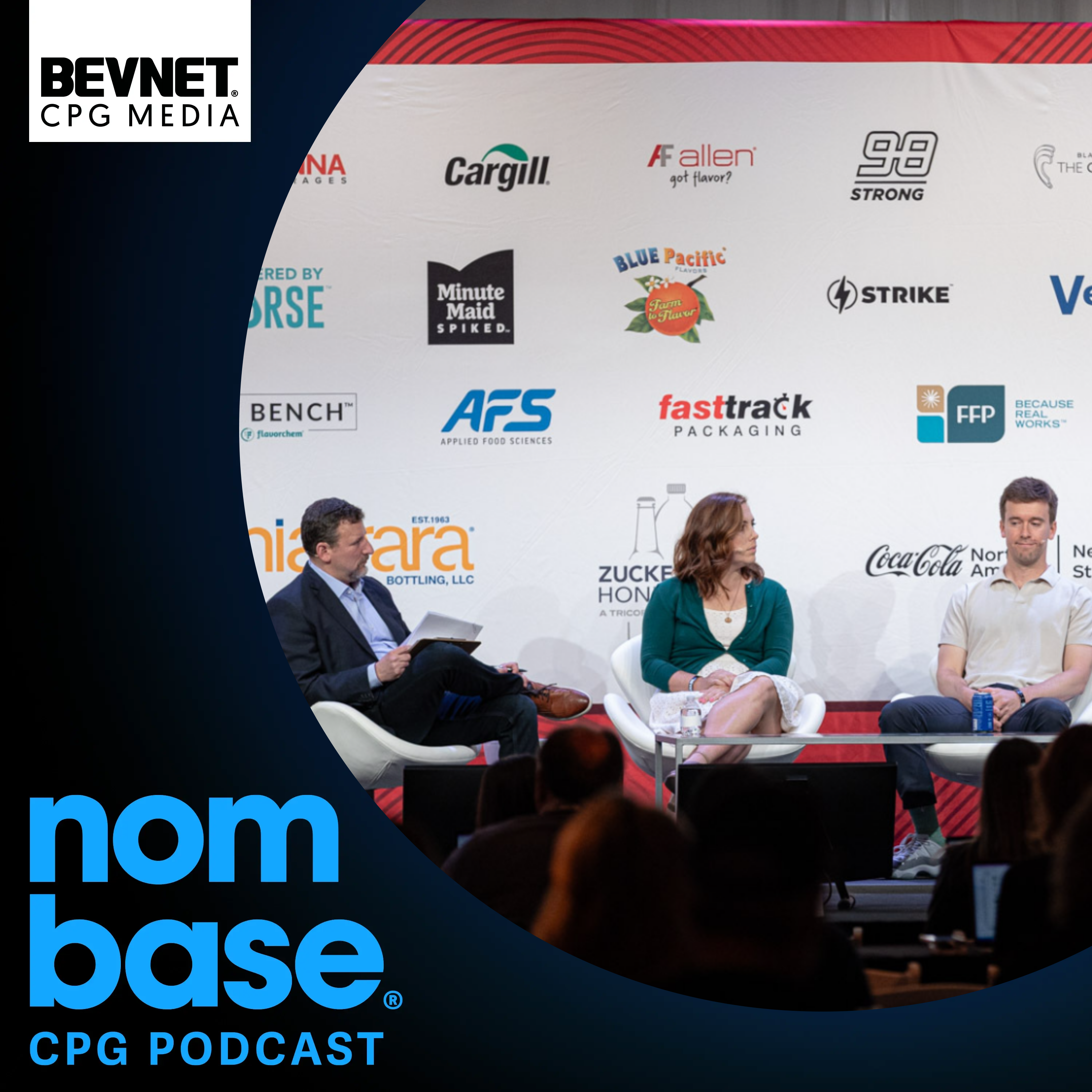
We, of course, kicked off NOSH Live with a presentation from Jennifer Garner and John Foraker of Once Upon a Farm.
Monica, you're going to have to give us the behind the scenes on Jennifer Garner.
Did you spend time backstage with Jennifer, just like hanging out and talking about stuff?
Yeah, I got all the celebrity tea.
No, I mean, we met for a few minutes just to go over what we were going to be discussing on stage, but she was just so nice and down to earth, even off stage in the little green room that we set up for her.
I think my favorite part of that discussion was you guys started talking about bringing the celebrity into CPG and so many brands have celebrities now.
And she just said, anyone in the audience who has a celebrity who does no idea what they're doing, send them to me.
I'll take all your celebrities and I'll educate them and teach them what's what.
And what she's doing with Once Upon a Farm is a masterclass in how a celebrity can steward a CPG brand into a really successful partnership.
And she's in the trenches with the rest of the C-suite, actually showing up to meetings and retreats and really walking the walk.
Well, I can tell you that it is resonating her brand and her association because I told people before that she was going to be here and they're like, oh, is it related to those Capital One commercials?
And I'm like, well, no, it's for her food brand.
And like, oh, yeah, that's in the commercial.
So she's in the zeitgeist at the moment, especially because of that ad campaign.
And that was something I didn't prompt people to say.
I asked them what they thought.
My uncle really wanted me to ask her on stage, what's in your wallet?
And I was not going to do that.
She may have left it in the dressing room anyways.
Monica, you asked her a question about what her secret is to her success with Once Upon a Farm.
And I think she said something like, it's this guy right here, and pointed to John Foraker.
But I think that that was a humble answer, because it sounds like she's pretty active on the brand and behind the scenes.
Absolutely.
But when you're working with an industry icon like John Foraker, credit is due.
He is amazing and so well known in this industry as a titan and a voice of reason.
And he's always posting these amazing, linked in messages about what brand should be thinking about at different stages.
So that was a total treat to have him on stage as well.
I think it's a really interesting question to going back to the whole concept of the celebrity founder, the celebrity partner in a brand.
How involved are they really?
And I think that's something people, the consumer is starting to ask more as we see how much.
Originally, it's not enough for a celebrity to just be a spokesperson anymore.
They have to be an investor.
They have to be involved and show ownership.
Now, everyone is doing that.
So now, it's almost a question of are they really actually involved in this or do they just sign their name and give some money?
And so, that's one thing that I think is really fascinating.
Again, have it really go into the weeds of that because it still gets a little mystified even when I ask brands about it sometimes.
It doesn't hurt that Jennifer Garner is a national treasure and so well liked.
She's not a problematic celebrity like some of those that we've seen behind CPG brands.
So, I have to think that that is really helping them as well.
She's a huge asset and it was just so interesting to hear what's going on again behind the scenes with her involvement with the brand.
So, I really enjoyed that.
I also really enjoyed Jessie Merrill from Good Culture.
I thought it was such an interesting and prescient topic.
Good Culture has been around for a number of years.
Ten years.
So, they've been around for ten years, but just in the last couple years or so, as we've seen protein trending, we see Good Culture, cottage cheese.
I mean, it's everywhere.
And it was such an interesting topic to hear.
How do you slow roll your brand until you blow up?
Yeah, I don't know if he foresaw the explosion that cottage cheese would have in the past year and a half because of TikTok and all the influencers who are creating these viral recipes.
But he certainly created a fantastic product and premiumized a stayed category by adding all of these really great attributes, organic pasture-raised dairy and no-gums stabilizers and thickeners that are so common in conventional cottage cheese.
Nosh Live was shock full of quality dairy products, high in protein.
I think at some point I was double-fisting, as was Jackie, Good Culture Cottage Cheese and Painterland Sisters.
I missed the Painterland Sisters.
I still haven't tried it, but I've heard that's like the best yogurt out there.
Brad, did you have a chance to try Painterland Sisters?
No, I didn't because I couldn't find any spoons.
They were in demand.
But I did try Doosera, which was in the pitch slam and just a really great Indian style snack brand with chickpeas and a lot of other grains.
If you like salty snacks, it's that type of product.
And I got a chance to talk with the founder.
He was telling me a bit about the pitch, too, that when you think about it, Indian food is pretty common now in the United States.
It's a regular takeout, but there's so many parts of the cuisine that aren't in the store yet that haven't made it here in the US.
And that's one thing that he's trying to do with the brand.
I thought that was a really interesting approach to snacking and to product development.
And of course, you're talking about Kartik Das, who's one of the BFFs of BevNET & NOSH.
Like I always say, it's not a Community Call podcast if we don't mention Kartik's name.
So Kartik, this just follows suit with every other Community Call podcast.
And Brad, I totally agree.
It's such an easily consumable product that he adds caramelized white chocolate chips to the snack mix, which isn't traditional, but is so, so delicious.
And one of my favorite pairings of the Pitch Slam contestants was chutney punch sprinkled on newish.
Well, so as one of the judges of the Pitch Slam, I can tell you we were doing that in the judge's sampling room.
And it was a fantastic combination.
Newish is great by itself, has a very good flavor, but it definitely punched it up a bit when you added a touch of chutney punch.
Punched it up a bit.
I did that on purpose.
My understanding was it was a really hard decision.
It was a hard decision, because all six finalists were fantastic.
Their presentations were solid.
The products are really innovative, unique and most importantly delicious.
There wasn't a bad product or brand in the bunch.
And so yeah, that was a tough decision.
But when you talk about like, you know, what did you try?
What were your favorite samples?
The winner, I have to say, was my favorite thing that I ate at the show, which was Mochi Loves, Creme Clouds.
There's nothing like it out there in the market, and they are so addictive.
They're so addictive.
And it's an unusual presentation.
In the United States, we usually think of Mochi as being ice cream enrobed in Mochi rice dough, but this is a refrigerated version.
And that is a really good point and something I think that they need to consider when they are going to market and messaging because I reached for it and I thought it was ice cream at first, and I was a little surprised when it wasn't.
I still really enjoyed it, but I had that confusion moment when I thought, oh, well, it's ice cream because that's what Mochi is when it's refrigerated and served here.
And I quickly came to realization that it is something different and I think that's a really great idea.
I think it's just the challenge is now already American consumers are learning about Mochi as an ice cream product.
Now you need to make sure that they also understand that it is something else.
Yeah, there will be some education involved for sure.
And also, one of the questions that we had in the judging room was, how do you merchandise this?
Would you put it with puddings and edible cookie dough?
It's obviously a grab and go refrigerated dessert because it is a two-pack versus a case with multi-servings.
So it's going to take a little bit of education, I think, on Brandi Miller's part, the founder.
But I know that she's aiming to build out a whole platform of products at different temperature states with Mochi dough as the hero ingredient, including a shelf-stable product.
I was chatting with Brandi about exactly that where it will be merchandised and she had isolated a couple of spots in the store that made sense.
One was refrigerated bakery where you might see Hail Mary, that kind of thing, or in refrigerated grocery where you'd see Honey Mama's Perfect Bar.
Midday Squares.
Those are two spots that are available.
Bakery typically has slower turns than grocery.
But grocery, it's such a competitive set.
It's really expensive, so it's an interesting predicament.
I'm sure she'll do the work to make sure that she lands in the right spot.
And of course, we can't forget the other two finalists at NOSH Live, Harkin Sweets.
I could not get a Harkin Sweets sample.
I even came down and asked Colin, our sample captain, extraordinaire whose birthday it was.
Happy birthday again, Colin.
I know it's going to be a week late.
I came down here looking for Harkin Sweets and he's like, no, they're all gone.
So Harkin Sweets was a contestant.
They did an amazing job in Broon Kitchen.
The amazing clean cookies.
I think at the end of NOSH Live, I saw Mike with a box of Broon Kitchen cookies and I looked away and I looked back and they were all gone.
Just some fun trivia to bring it back around.
Sample Captain Colin, Jennifer Gardner signed his birthday card.
Yes, she did.
You made that happen, didn't you, Monica?
No, no.
The credit goes to Carolyn Craven.
Okay.
Carolyn, we salute you.
That is an amazing birthday gift for sure.
Brad and Monica, thanks so much for joining me here live from BevNET Live.
Congratulations to both of you on such an amazing show.
From what I heard from our audience, they did as well.
Well, we are so excited to launch into BevNET Live.
We've got one-to-ones with Whole Foods Market, Albertsons, Spex and Pilot.
We've got amazing presentations from the likes of Happy, Life Aid, Recess and Kavu, Cocktail Sampling, everything you could ever want to see at a conference like this.
So I hope everyone has an amazing time.
And at BevNET and NOSH Live, we dive deep into all kinds of tactics and strategies that shape the CPG business.
One topic that's been top of mind for everyone at this show is how to conserve capital while driving velocity.
A big part of that is trade spend, finding the right balance in discounting, timing and frequency of offers, and staying competitive in your category.
In this episode of Community Call, we'll share key category data to keep you ahead of the curve, provide insights on fine tuning your promotions, and explore how to efficiently target the audiences that will boost your velocities.
Please enjoy.
As I just mentioned, we're hosting a cocktail sampling and showdown at BevNET Live, a category that's a key focus for the NielsenIQ On-Premise data team.
NielsenIQ On-Premise tracks beverage and alcohol consumption across bars, restaurants, hotels, and entertainment venues just to name a few.
In this episode of Community Call, we spoke with Matthew Crompton and Ben Tilton of NielsenIQ along with our spirits editor Ferron Salniker to dive into the latest data on ready to drink alcohol in the On-Premise space and what it means for the category as a whole.
Please enjoy.
Today on Community Call, we have the NielsenIQ On-Premise team sharing their latest data on RTD alcohol trends to help us understand where the biggest opportunity for brands is.
Ben Tilton, Associate Client Solutions Manager and Matt Crompton, VP of CGA On-Premise are joining us as well as our very own Ferron Salniker Spirits Editor joining us in conversation.
Well, I would just like to thank all of you for joining us today.
Let's start off with some introductions so everybody gets to meet you.
Matt, let's please start with you and tell us what it is that you do over there at NielsenIQ On-Premise.
Yeah.
Thank you, Melissa, and thanks for having us.
Delighted to be here and take part in this Community Call.
As you said before, I'm Matt, and I run the Americas team for CGA here, which is the On-Premise side of NielsenIQ.
Many of you listening will probably be thinking, well, that accent doesn't sound like a local American person, and you'd be absolutely right.
I'm from the North of England, from the Manchester area, but I moved to the US in 2015, and I'm now based out of Chicago, and I've been here for the last nine and a half years or so.
I came over to launch this business, to launch the CGA business, and then subsequently run it.
And about two and a half years ago now, three years ago, NielsenIQ purchased CGA.
So we fall under NielsenIQ, the whole aim to give our clients and to give the industry the full view of what's happening in the market from a beverage alcohol perspective, and really understand sales, consumer trends, analytics, for everything in bars, restaurants, nightclubs, anywhere where you do it on the premise.
And yeah, that's what we've done for the last nine and a half years.
So really interesting topic today, and excited to get into it with you.
Can't wait to get into it.
Thank you for that.
Ben, so nice to have you here.
Please tell us a little bit about yourself.
Thanks.
Yeah, pleasure to be here.
Thanks so much for having us.
I work closely with Matt and the rest of the CGA team.
I'm based in Western North Carolina in the Asheville area.
Been with CGA for a few years, actually came on right before we joined the wider Nielsen IQ team.
But it's a great position, love working with this data, love working in an industry that I've been passionate about.
Since before CGA, I've worked in the beer business, both production, sales, distribution, all across the board.
So I love being able to speak about this from a granular level, connect with folks in the industry.
It's a very nuanced industry and it's something that's changing all the time, which keeps it interesting.
So excited to share some of the insights today and hopefully get to know some of our viewers afterwards.
So thank you.
Ferron Salniker, I think so many folks in our audience know and love you already.
Could you tell us a little bit about, do you typically focus on premise, brands and product and news?
How much of on-premise do you typically focus on in your work?
Yeah.
Hi everyone.
I try to have a balance in my coverage.
A lot of our audience are folks who are mostly focused on the off-premise because maybe they're coming from the non-alc world.
But as we grow our spirits coverage, on-premise is such an important part of spirits and now non-alc spirits.
So I try to maintain a balance and I do that by doing very important research of going to bars and restaurants and trying drinks.
No, but I'm always talking to folks about trends in the on-premise.
I'm always talking to brands and also bartenders, and bar owners just to understand what's going on in that space.
A lot of seriousness in that work that you do, I know.
Absolutely.
Well, it's so nice to meet you all and to have you all here, of course.
Let's start off with just understanding how Nielsen IQ On-Premise collects its data.
Matt, could you tell us a little bit about that?
Yeah, absolutely.
And, you know, measuring the on-premise, I'll be honest, is difficult.
It's really tricky, right?
And now I could talk for the whole length of this show about it.
I'm sure viewers don't want that.
But I can sort of give you the quick version.
We have measurement data.
We have consumer data.
We have analytics data.
We also do lots of research with the operators themselves and bartenders and so on.
But if we look at just simply the measurement data.
So, you know, how can we say that vodka is up 5 percent, whiskey is down 5 percent, whatever it may be.
How can we get to those numbers?
What we have at CGA is we basically have a product called OPM, On-Premise Measurement.
So, in brief, we basically set a representative sample of the market because there's 300,000 bars and restaurants in the US., of which around 75, 80 percent are independent.
There's no way we're going to be able to go and get data from all of them.
So, it has to be a sample-based model to do this representatively and do it properly.
Then what we do is we go out and we buy point of sale data.
So, the actual till data, which is in bars and restaurants, we go out and buy that.
We essentially put it into the model and report that out.
Now, the challenges with that is in the On-Premise, point of sale data is very unreliable.
What if it says guest beer or it says house white wine or just margarita?
How do we know what tequila brand has gone into it?
So, we at CGA have to be very, very data agnostic and we have to take as much as we can get our hands on essentially to give the most accurate picture possible.
So, to do that, we also web scrape around 150,000 menus online, so that gives us a good idea of distribution and price.
We also do physical audits of our sample accounts to understand what's being bought in.
And then finally, we also work with our clients and they essentially share their depletion data with us, so it allows us to understand what's being bought in to those accounts.
So, in short, there is no one simple answer to how we do it.
It is quite sort of multifaceted, but what we have now is a service which has been going for about seven or eight years.
It has become the industry standard here.
Nearly all the major suppliers and major distributors across beer, wine and spirits use it and we believe it is best in class.
We base it on the model that we do in other countries and again, where those same suppliers buy into it to truly understand what is being sold, where and when.
As you're describing all of the inputs, I'm thinking that your data analytics and collections team must be very well appreciated.
They absolutely are.
Yeah, we cannot sing their praises enough.
Many of them are still based actually in the UK and they do it across all the countries and like, it's a thankful task, to be honest.
It's something which does take a lot of time and that coding effort is something which sort of sets us apart, I think, really.
So yeah, kudos to them.
Me and Ben are the ones who are lucky enough to get to talk about the trends, not necessarily make them and go through all the data.
So yeah, it really is a team effort.
Well, thanks to them.
We have some great information to dive into today, specifically RTD alcohol On-Premise.
So many of the brands in our ecosystem are RTD products.
So this is going to be incredibly instrumental in helping those folks understand where their opportunity is.
Let's start off with defining how big that RTD opportunity is On-Premise.
What are we looking at?
Yeah, I can take this one and then maybe Ben, you can add a little bit more detail.
I think it's important before we get into the numbers, just to define what we state RTD is, and because it's a term we've sort of come up with as an industry, isn't it?
There's sort of everyday man or woman in the street, might not necessarily know we would call it an RTD.
So for this purpose, Nielsen IQ, particularly in the Off-Premise realm, we're going to include everything.
So hard seltzers, cocktails and cans, wine-based, spirit-based, beer-based, everything in there.
And actually in supermarkets now, in grocery stores, that's a $13 billion category.
So it's something that should not be sniffed at.
That's 12% of all total alcohol in the market.
Now, on-premise, it does look a little bit different because it's much smaller, okay?
It's much smaller now.
Usually, and we still have data which backs this up, many trends start in the on and then proliferate through to the off.
RTDs and hard seltzers within it are perhaps the exception to that rule in that it was maybe a response to sort of COVID-19, people staying at home and so on, then filtering through to when things opened up again.
So it is much smaller in the on.
It's around about 1.2% of all dollars spent in the on-premise come from an RTD, but that number is growing significantly.
So in terms of growth, we are seeing a significant uplift, and we're seeing that that category take about 0.5 percentage points of total share, and mainly from traditional spirits, but also wine as well.
Certainly, if folks can catch a trend at the outset, you have a better shot, I think, of getting your foot in the door.
So it's a great time to be talking about this.
I had a quick question.
What is the difference between a canned cocktail and its spirits-based product?
I heard you mention both of those.
Are those separate or are they sort of the same thing?
We're all encompassed under the same thing, really.
Okay, perfect.
Well, thank you for that.
Let's get into who's drinking on-premise.
What are the demographics of the consumers who are purchasing RTD products?
Ben, could you take this one?
Yeah, absolutely.
So I think, as Matt kind of mentioned, of course, we cover OPM in terms of volumetric measurement.
Another one of our services, which is really key to kind of understand the consumer, is called OPUS On-Premise User Survey.
So as I'm speaking more about this consumer data, that's where it's coming from.
This is a biannual survey that we run in the spring and fall every year.
It's nationally representative.
We're reaching 15,000 consumers that actually visit the on-premise, each one of those surveys, so 30,000 across the year.
We ask everything from category, brand preferences, flavors, occasions, influences to drink.
It's quite a robust survey, so from that data, we can actually start to understand these different category drinkers.
RTDs specifically, in their latest data, we're seeing that one in five on-premise visitors are consuming RTDs already.
So already a pretty big chunk of those on-premise users are engaging with the category, and we've noted that this has actually increased slightly over the last couple of periods that we've surveyed.
In terms of who those actual drinkers are, I think that there's been somewhat of an assumption that it's typically led by the Gen Z, the LDA drinkers getting in.
And I think it's definitely important to recognize that there are other consumer groups that are engaging with RTDs.
Makes sense when you think about the kind of wide breadth of flavors, profiles that can kind of encompass that whole category.
But 40% of RTD drinkers, for example, are 35 to 54 years old.
So I think it's really important to understand that it's not just a Gen Z play.
When we talk about the different types of venues and different types of occasions that RTDs can hit, we just want to keep that in mind, right?
RTD drinkers are essentially really engaged with the On-Premise.
They're going out to eat and to drink different occasions, well more than the average consumer.
And, you know, they're valuable to the On-Premise in general.
So trying to win that occasion is going to be really key for operators as well as suppliers.
And then just demographically speaking, it's pretty even split.
The RTD drinker doesn't skew in any one direction.
They're pretty much aligned with the average consumer, 50-50 male and female split.
So besides those age range differences, you know, we're looking at that specific drinker as being highly engaged and showing a lot of opportunity essentially across the board for food led occasions, drinking occasions and a range of flavors.
So, you know, as we get into a little bit more of the channel kind of opportunities, we just kind of keep that framework in mind.
You mentioned channel opportunities.
If we want to further a segment or conversation into what the particular channels are, I think we should do that right now.
Matt, what are the specific channels that CGA will be talking about today?
Often we get asked, can RTDs make it in the on-premise?
And as with everything, it's not black and white, right?
There are some gray areas.
And the answer really is it depends on the type of on-premise location, because you're going to have premium bars, you're going to have some of the more sort of higher end, where the expectation is that bartenders, mixologists, etc.
are going to make these drinks for you.
That's what you're paying for.
You're paying for the experience.
You're paying for the theater of serve.
We run a study called Channel Strategy, which basically does exactly that.
It gives our clients a strategy for different on-premise sub channels.
And within that, we can actually look at the RTD opportunity and find some of the places which perhaps are better suited than those sort of premium bars or even the more traditional casual dining.
Sort of locations.
What becomes apparent is RTDs really fit in perhaps less of the traditional on-premise spaces.
And by that, what I mean is things like hotels in terms of sort of grab and go with a nice sort of fit there.
But also, and I don't necessarily like this term, but the entertainment venues.
So what I mean by entertainment, lots of people have different definitions for this.
It's like experience based bars, game based bars, et cetera.
Essentially, where you go to a venue and the purpose of that visit isn't necessarily the food and drink, it might be something else.
So mini golf, axe throwing, there's loads of weird and wonderful different places which do this.
Now RTDs actually are a good fit in those type of venues.
And what we've seen from our data is the top three venues for this category essentially is high-energy venues.
So that would include night clubs, but also day clubs, which are seeing more and more apparent.
These entertainment, experiential places.
And then we move into sort of premium bars, but more of those high-energy ones like rooftop bars, private clubs, et cetera.
That's where we're seeing RTDs win.
Now what's quite impressive about those is in terms of average spend per head in the on-premise, high-energy venues, and then experiential bars.
They're both in the top five in terms of what people spend their money on.
So that's a good sign for the RTD community, because it shows that where they are set to win, people will spend their money.
And it's often where that younger consumer that Ben said is where they're going.
Other notable callouts, I think, would be places like airport bars, just anywhere which is sort of quick, and you want that quick and easy serve, et cetera.
You might be doing something else with your hands, like the experiential bars, put the point.
That's where I'd say channel-wise, RTDs have the best chance of success in the US on-premise.
I'll be the first to admit I'm not in the cutting edge of what's hip.
What is a day club?
Yeah, good question.
We have seen a huge trend, and globally this is, of people going out earlier in the day, and that sort of late-night occasion changing, essentially, sort of exactly what it says on the tin, it's a night club, but in the day.
So some of the big venues in Las Vegas and so on, where you'd expect you would see some of this type of venue, very, very niche still, very, very small, and very much in its infancy, but something to sort of keep an eye on.
I also like that Axe Throwing was one of the ones you mentioned.
That is actually one that I think wouldn't make sense for RTD alcohol, but I guess you have to be careful about how much you consume.
Exactly, not all Axe Throwing bars will allow you to drink alcohol.
I will say that.
I think that's a state by state variation.
We'll get into what's trending in those locations, but before we do that, I also wanted to chat with Ferron a little bit about some of the channels that you keep your eye on.
We're talking about hotels, airlines, sports arenas, concert venues, those kinds of locations.
What are you seeing there?
Yeah, I was going to say that I often don't see RTDs in the On-Premise, but probably because I'm not going to entertainment places or day clubs either.
But where I do see them for sure is on airlines, and airlines have been almost fundamental to RTD marketing, which has been really interesting, like since the category took off, there are a number of brands that got into airlines early.
So, On the Rocks, Tip Top, Buzz Balls, Spritz Society, even.
I don't know if anyone's gone through the Portland Airport recently, but straight away has a whole even like kiosk where you can sit in half their cocktails.
And I think there's two important things about that for brands that are listening.
One is that what's interesting for airlines is that it is not the best moneymaker for brands, from what I understand after all the paperwork is done.
But it is great for marketing in the sense that there's this captive audience and that they're catching consumers usually at like a very happy point, right?
Like consumers are probably more happy on an airplane than they are at the grocery store or they're on their way to something memorable.
And so a lot of brands have insisted that it's worth it to be in these travel channels like airlines and hotels because it's creating this memory with this brand.
So they double as great marketing opportunities.
And I think what I've learned from brands who have been on airlines is that the key to securing those accounts often is going local.
So looking at what airline is, what is hubbed, where you are based.
So if you look at Tip Top and On The Rocks, they partnered with airlines that were hubbed in their home cities.
And so I think that gives these RTDs a bit of an edge.
And I think it's a great partnership.
It fills needs for consumers who obviously want something better than a little mini bottle and then mixing their own drink, right?
And then hotels, again, it fills such a great need.
If there's not a great hotel bar, if the bar closes at a certain point, the mini bar is a great place.
So I've seen a lot of RTDs build up their marketing, usually starting locally where they're based at hotels in their cities.
And so like DIO, for example, is a beautiful can cocktail, and they've made a lot of headway in upscale New York hotels.
And the owner told me that their 200-milliliter cans just really allow for flexibility.
The cocktails can be had on ice or not, so they can go on the mini bar, at the pool, at the bar, and the design kind of pops in a mini fridge.
And so it just doubles as the marketing for them.
So those have been really fun channels to watch.
I mean, even as a hotel guest, like, that's exciting.
I love, like, a pimped out mini bar personally.
Who doesn't?
Yeah.
And then sports arenas and concert venues have been really fun to watch as well, because there's been a lot of creativity over there.
Like the guy said, you know, RTDs play a role where you need a portable drink and where there's ease for the people behind the bar.
And so I've seen bulk.
I guess they wouldn't be ready to drink.
They're like ready to serve or ready to pour bulk cocktails that have gone into big stadiums and they have hooked up to the keg.
So I think it's called half-day keg cocktails.
They have been in some big arenas.
They did a custom cocktail for Taylor Swift.
It was like a glittery cocktail.
And they got in that way because it's about ease.
You know, someone behind the bar can pour in the time of pouring a beer, but they can mark it up like a fresh cocktail.
And so that's kind of where you find a win.
Similarly, there's a coffee alcohol brand Alcachino, which is doing like a coffee house within Live Nation venues.
And so they're providing a unique experience and they're providing cocktails that typically would be very hard for someone to make at a concession stand.
So yeah, it's really fun to watch these things.
And I think for brands, it's really just finding those spaces where you can connect either through like it being a local venue and where you can provide a real service.
It sounds like there's a lot of opportunity for creativity.
You mentioned kiosks, a cafe venue, and also the quality of product that you might find in an airline or a hotel is so much better than it used to be.
I think it's probably easy to delight people because they may not be expecting such great options.
Thank you for that, Ferron.
All right, Matt and Ben, thank you for carving out those channels that you mentioned.
Now, let's dive in to the specifics of what's happening there.
What are people ordering?
Yeah, you know, I think that we kind of using that benchmark that we talked about earlier when it comes to that overall opus view of the RTD consumer being about one in five, we see some similarities to that number in terms of those key channels that Matt mentioned, those experiential, entertainment, high-energy venues.
Obviously, there's some overindex in terms of high energy.
I think that's one that we want to focus on.
That is the number one channel for RTDs right now, perhaps on a largely younger consumer base.
Still plenty of opportunity for that middle-age range as well.
But we do see engagement with RTDs, and that includes the likes of hard seltzers.
A lot of that is from premixed cocktails, not just the spirit and mixer type, as well as the single-serve wine.
I think that's definitely being led by the premixed cocktail type.
So the actual margarita in a can, the Long Island iced tea in a can, hard tea and lemonade mix, those types of drinks versus the vodka soda, for example.
So there's definitely an opportunity for a range of flavors in there.
I think that one thing that does kind of call out to me when we talk about, and I think Ferron kind of touched on this, we think about that convenience opportunity, right, in these channels where you want to get your drink and continue to have fun.
You don't want to sit at a bar and wait, both from a supplier perspective for rate of sale, as well as the operator turning more volume over.
I think that's really important to think about when we talk about venues like high-energy venues, and it really does present that opportunity to get more brands in front of people when you talk about turnover and rate of sale.
One thing that is interesting about high-energy is that RTDs are actually the number one ranked category when it comes to value for money.
I think it's really, and that is over cocktails, and spirits, and wine, and beer.
I think it's really interesting to look at that, because when we think of RTDs, we just go into the, well, it's good enough, but it's really convenient.
The reality is that the consumer is looking at this from both a quality perspective, a convenience perspective, but they're also getting their bank for their buck.
I think that is where there's an opportunity to kind of lean into the share gain in terms of where RTDs are gaining over other categories.
They're winning that occasion first, and the innovation and the flavor opportunities that consumers see when they see an RTD, it's a novel thing, sure, but they're starting to realize that they can get good quality for a lower price point.
And I think that that's something about high energy and entertainment, which could prove to be where we see growth for RTDs.
And just to clarify, when you say high energy, again, we're talking about clubs, right?
Yeah, so every kind of club, I guess you could say nightclubs, but day clubs are also really interesting.
I know we didn't really dive into that one, but those actually over index versus nightclubs for RTDs by a considerable point.
I think the range of venues or amenities within that type of venue really kind of lean into more of day part shift that we see in the wider On-Premise, those trends as we go less and less from nighttime into more day parts.
And then just being able to be about the coffee shop, a live music opportunity, as well as more of a traditional bar in the daytime with more sessionable options, I think is really kind of helping RTDs along in that specific venue and day part.
So if we take a look at those three channels, Eatertainment, Premium Bars and High Energy, what can you tell us about those three separate channels in terms of what consumers are looking for?
And that may be flavor, it may be how much they're willing to spend.
What's the format?
How are they being served?
Is it on ice?
Is it just out of the can?
What can we learn?
Yeah, I think by and large it is straight out of the can because the key thing here and it's the number one really for RTDs at the On-Premise is fast service and portability.
If you can get those two things and align them with the consumer's mission, whether that is to play a game, watch a sporting event, watch live music, et cetera, that's where there is the opportunity.
And I think out of the three you mentioned, it's more in the two of the entertainment and high energy venues as opposed to premium bars, just where something else might be expected.
I think that one watch out for RTD owners and brand owners is the On-Premise is really competitive because there's only so much shell space, right?
Now, obviously in the Off-Premise, there's only so much shell space, but there's significantly more sort of real estate that you can have.
So what's going to become apparent in the On-Premise is these brands grow, whether that be ready to drink, ready to serve, hard sales, et cetera, is that it's just going to be the ones with the strongest sales stories, the ones which provide the greatest rate of sale, the top flavors which win out, because it just simply isn't the space to put everybody's very flavored drink, or everybody's margarita there, like there is in the off-premise where you can have clear pricing ladders, you can have various different structures and different things.
You're just not going to be able to do that in the On-Premise.
So my advice to anyone who's looking to win in the channel with this type of product is, yeah, portability absolutely key.
We know all of that.
But also just get your priorities right on what type of venues, because everybody else is going to be looking at the same type of ones as well.
And that's going to cause some serious competition.
And I think we will see almost a consolidation of the best ones being more available.
Whereas in the Off-Premise, you're going to probably get more limited editions.
You're going to probably get more seasonals.
Ferron was talking a little bit about some of the marketing opportunities that she's been noticing.
Are there any marketing tactics or opportunities that you've noticed across those three channels that you were chatting about?
And it couldn't be, I mean, if it's really, if the product is being served just right out of the can, it may be as simple as what does that look like and what are they telling you?
I think you've nailed it.
Yeah.
And to be honest with you, the On-Premise for everything is a marketing channel, for everything, especially within the package space.
Unless, you know, if we remove draft beer and wine, which often is going to be served to a class from a table, consumers are walking around with your brands on it.
So, I think that's one of the key differentiators that brand owners need to make, that don't view it as off versus on, on is a marketing channel.
It is a marketing channel and you can almost take it as sometimes a hit on what potential sales might be, just for being in there.
We know lots of our premium spirits clients, they have, you know, luxury accounts that they go to.
I doubt they make much money off them, but what they do is it's all about equity and it's all about where to be seen.
Following off of that, Matt, we do a study channel strategy, which Matt has mentioned previously, and a lot of it has to do with kind of path to purchase, understanding beyond just what customers are choosing, but also like the influences, how they're making those decisions, how they make switching behavior decisions, and higher energy specifically kind of stood out in that, by and large, consumers are deciding what they want to drink before they even enter the venue.
So that really speaks to perhaps such an important channel for RTD really needs to reach those consumers before they even get in the door.
So I think RTD, it's going to be a challenging competitive landscape to reach those consumers through social media and marketing channels that aren't actually in the venue.
There is limited opportunity to get bartender recommendations potentially in a certain environments in the channel.
There's sometimes limited point of sale marketing within the channel.
So being able to reach consumers and build an organic need for the brand or desire to trial the brand can lead to really good opportunities for trialing once in the venue.
And I think that that's something to keep in mind that each of these channels have different ways of reaching consumers.
And that's something that we can dive into with this study and some of our research at CGA.
Fascinating.
So consumers are making the decision of what they're going to drink before they even get there.
Does that mean they know that they're going to order a spicy margarita or do they know that they're going to get Dio's spicy margarita because it's a couple bucks cheaper than their option on the menu and it's delicious?
Yeah, I think typically the way we would probably look at that is by category, rather than a specific subset.
I mean, certainly could understand a brand.
I think that's where the brand opportunity comes in.
But brand or category is definitely prior to arriving.
But when we also, I know we hark it back to the comment about value.
I think that's where it really comes in.
I mean, if you're sitting there thinking about your next drink and you see a cocktail that's $15 on the menu, for example, or an RTD, which is $8, largely, I think those consumers might be thinking with their wallet.
I think that there's definitely an opportunity, especially the high-energy rooftop bars and the likes, where they're a little bit more of a premium experience.
Not to say that consumers aren't looking to premiumize and are looking for less of a really good thing, versus a little greater volume of something that's maybe slightly less quality.
But I think there is definitely, I think something like 30% of high-energy visitors are actually looking for something that can save them money, bigger bang for the buck.
A lot of them are looking for a little bit of both.
So there is that opportunity to kind of have that narrative around value and really driving that trialing and repeat buyers from that.
I saw some information that you shared about how much consumers are spending on an RTD product.
Could you share that number with us?
Yeah, sure.
As part of OPUS, we ask about customer willingness to spend.
So this is not to be confused with volumetric data, but essentially we want to understand how consumers are looking at category by category, how much they're willing to spend.
Right now in RTD, the average spend would be $8.
So that's what a consumer is looking to spend.
Of course, we are thinking about this from a national perspective and understanding this is a wide variety of different outlet types.
But if we kind of benchmark that against cocktails, which are in the low teens, often $4 to $5 more, you can start to see how there is a price gap there.
So if you're leading with quality and you're also offering consistency, you're definitely going to reach those consumers and potentially win that occasion.
And I think it's something for spirit suppliers to be thinking about as well, as we look at how that competition comes.
And if you're looking at a select amount of your consumers that are reaching for RTDs first, and then they're getting into the cycle of excitement around the flavor, innovation, convenience, you've got a really strong story to fight against.
So it's something to be mindful of, and I think could potentially be evidence of why RTDs are gaining share in the On-Premise as an example.
And that $8 number, does that combine to the Mike's Hard Lemonades of the world with the DOs and the straightaways?
Yes, it does.
That would be like a wider RTD view, not a specific, yeah, averaged out.
Ferron, we were talking about this a little bit.
Are you seeing in your travels that bars are offering ready-to-drink cocktails alongside craft cocktails?
Is it one or the other?
How do you see them showing up?
I'm not seeing much of RTDs showing up at high-end craft cocktail bars, except for those bars are, I've seen this in LA making their own RTDs, which is interesting and fun.
And I even checked in with Southern Glazers, which is one of the largest BevApp distributors in the US, about what they were seeing, because they just did a study on cocktail trends, and he said they were not seeing many RTDs in the really high-end cocktail bars.
But where I do think they have an opportunity in bars, is if we think about high-end bars, but say wine or beer places, those places have licenses that don't allow them to sell spirits.
And so they might not be making anything similar to a cocktail.
They might have beer, wine, kombucha, whatever.
So if someone comes in with an RTD that's a sake-based or using some kind of base that's not a spirit, but have a cocktail-like creation and a can, that's an opportunity for that restaurant or bar to offer something different that feels like a cocktail but that they can sell.
And so doing a story right now on sake and I'm seeing, there's definitely some openings there for more like sake-based cocktails.
So that's been interesting to watch.
And then otherwise, I think when I do see RTDs pop up on craftier cocktail menus, it's an espresso martini, something that is really hard for folks to make.
So if they find a good one, they're going to use that, instead of having a bartender take a lot of time to make espresso martinis.
I'm sure we've all seen the meme of the one person who orders an espresso martini, and then 10 other people do.
So I think that's an interesting opportunity.
And I think also one thing that I am curious to ask Matt and Ben about is, I think when consumers think about value, they're probably also thinking about consistency.
I wonder if any of that shows up in the data, because I do think in addition to say something a little bit cheaper, it's like a known quantity.
And so there might be RTDs popping up on craft cocktail menus, because it offers a consumer something that they know what they're going to get.
And I can relate to that.
I live in LA.
I don't want to gamble 20 bucks on what might be a mediocre cocktail.
And so, yeah, I'm curious if consistency.
I know for sure consistency with non-alch RTDs is a factor.
Like, consumers have said in studies that they might reach for a non-alch RTD over a non-alch freshly crafted cocktail, because they may have tried that RTD before, and they think it might be a better bet than trying a new non-alch cocktail.
Obviously, that category is so young.
And so, it might be more of a gamble in that sense.
Yeah, I'd agree with you.
Value for money doesn't always mean cheap.
It doesn't always mean low cost.
It means exactly what it is, getting good value for what someone's willing to pay and what consumers are willing to pay.
And that does favor those tried and trusted brands, which are often on an RTD package.
You can see which brands are in there and so on.
And I do think that's where you can win.
We do think that the on-premise, we do get consumers experimenting more, because what would you rather do?
Try a brand, particularly in the beer space, you're going to try a brand for maybe $7 on draft or buy a full case of it for $15.
You can have that more experience, experimental play.
But yeah, absolutely, I completely agree with you with your point there, Ferron.
That's been really helpful in helping us understand what the opportunities for RTD alcohol are.
How about non-alcohol?
I know certainly that we're specifically talking about alcohol here, but are you seeing any high-level trends around non-alcohol alternatives as sober curiosity, increases in numbers, and sort of the same situation?
Consumers are looking for something of value.
They're looking for consistency.
Just because you're not having a cocktail, it doesn't mean you don't want to have a delicious beverage.
Yeah, I can take that one first.
And again, looking at the Nielsen IQ Off-Premise numbers, the total non-alcoholic category now is $740 million over the last 52 weeks.
That's actually up 31% versus a year ago.
So it's a significant category.
The vast majority of that is from non-alcoholic beer.
But that's not to say that there isn't a place for spirits, wine, or RTDs to sort of come in and play.
The On-Premise is a little bit different.
And again, I think it comes down to that assortment, how much space there is in the On-Premise, where you might get 20 different non-alcoholic beers in a supermarket.
You might get one or two in a bar, right?
Just because there simply isn't the space.
But it's still around about $250 million to the On-Premise at the moment, non-alcohol.
Again, about 95% of that is from beer.
But what I would say is the more frequent On-Premise visitor does actually under-index on non-alcoholic.
People who are going regularly to bars and restaurants are usually the Beval drinkers.
There is a bit of an under-index versus people who shop grocery stores.
But there is also a common misconception that people who drink non-alcoholic products don't drink alcohol at all.
That isn't the case.
It's not so much sober, it's so much sobriety.
It's actually moderation.
It's people just cutting back.
And again, it's not necessarily a term I like.
I think we need a better one in the industry.
But people talk about like sort of zebra striping.
And as a trend, basically having one alcoholic drink then one non-alcoholic drink, then one alcoholic drink, etc.
So it's knowing where your products sort of fit.
So sort of bring it round to your question though, Melissa, what about non-alcoholic RTDs?
I think in the On-Premise, that is very, very, very small at the moment.
Too small for us to even report on as things stand.
But absolutely watch this space.
There's certainly a desire for different drinks and different brands which provide different consumer needs.
So if the market continues to go the way it's going, then there naturally will be a position for those in those certain types of venues.
I hadn't heard Zebra striping.
It'll certainly be interesting to see how that market grows.
Ferron, in terms of On-Premise, non-alc RTDs, are there any strategies that you're seeing work for brands?
Yes.
So again, it's, as the guy said, I don't have too much anecdotal evidence, but I have been going on non-alc safaris, in LA, as I'm calling them.
So specifically, going to bars that I think have good non-alc programs and really trying to find the best.
And one of the best cocktails I've had so far was basically taking the Gia products, which is a popular non-alc product.
They have canned cocktails and then they have a larger multi-serve aperitif.
And the cocktail menu featured two of the canned cocktails.
So you could buy that on their own.
And then it featured two freshly made NA cocktails using the Gia aperitif, but it was kind of like jujed up.
So they had taken that product.
They had added a couple ingredients, batched those cocktails.
They were ready to go.
And so consumers had two options.
One was a little bit lower cost.
One was a bit higher and a freshly crafted cocktail.
All of that was delicious.
And I will say I think that is going to work well for that bar or that brand because you're providing multiple options and you're providing some flexibility for the bartender to make a different cocktail without too much work.
I think what I'm hearing a lot from bartenders is that the RTDs themselves are not balanced enough.
That's like the biggest complaint because it's very hard to make a well-balanced cocktail without alcohol and so the RTDs themselves need something else in order for them to feel like it's a cocktail that's on par with the other cocktails on their menu.
So having this multi-serve product also allows bartenders to experiment it without having to add too many ingredients without making their NA cocktail menu very laborious.
So I think that was like a really interesting thing to see.
The cocktails were delicious and I wonder if that's kind of a sign of what it's going to look like going forward.
What was the price differential between the crafted cocktail and the canned?
A couple dollars.
So it wasn't hugely significant, but I think that it provides the opportunity for consumers to have just different options if they want to hold a glass and feel like they're drinking a cocktail they can and if they want a cheaper option, but have something that feels a little more elevated than a soda, they also can.
Well, thank you all so much for such a great conversation.
That was fantastic information.
I hope that all of our RTD brands got something useful out of that.
Ben Tilton, Matt Crompton of CGA On-Premise, thank you so much for joining us.
Ferron Salniker, as always, is BevNET Spirits Editor.
It was such a pleasure to have you here.
Thank you so much for joining us on Community Call.
For everybody else, you can watch a recording of this call at bevnet.com/communitycall.
You can sign up for future calls there as well.
Thank you so much.